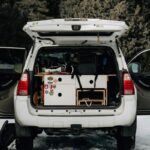
Sleeping in your SUV requires transforming a vehicle engineered for dynamic road travel into a static, ergonomically sound shelter. Generic guides often suggest simply throwing an air mattress into the cargo bay. Learning how to sleep in your SUV safely requires a deeper look into the vehicle’s structural layout to maximize your available space, which typically yields 70 to 76 inches of clearance when the front row is moved forward.
Experienced overlanders recognize that vehicle geometry, modern automotive electrical logic, and thermodynamics present severe obstacles to quality rest. Succeeding in an SUV build requires correcting interior slopes, bridging unsupportive gaps, preventing phantom electrical drains, and managing interior moisture.
Here is the mechanical blueprint to optimizing your vehicle for backcountry and trail use.
Ergonomics and Leveling: Flat vs. Level Beds
Achieving comfort inside an SUV requires distinguishing between a flat platform and a level bed. Many sport utility vehicles feature cargo floors that do not fold to a true 180 degree horizontal orientation. This presents a distinct slope that compromises sleep ergonomics.
Resolving the Non-Flat Cargo Floor
Overlander trail tests frequently highlight vehicle specific layout flukes where rear seats create an obstructive incline when folded down.
- The Geometric Problem: Placing a rigid sheet of plywood or a thick foam mattress over an angled floor does not solve the incline. It merely provides a smooth, sloped surface that causes sleepers to slide downward throughout the night.
- The Asymmetrical Correction: Campers modifying a best car camping mattress for toyota 4runner setup deploy asymmetrical supports. Overlanders often cut the platform frame legs on one side slightly shorter than the other, custom adjusting the leg lengths specifically to counteract their vehicle cargo floor slope.
- Physics Check: When constructing any raised platform, ensure the frame is securely anchored to the vehicle factory cargo tie down loops using turnbuckles or heavy duty ratcheting straps. An unsecured platform can become a dangerous projectile in a high speed collision.
Bridging the Front-Row Void
When tall sleepers slide the front seats entirely forward to maximize total sleeping length, a dangerous structural gap opens behind the front row. This is a notorious issue noted in space guides for the best car camping mattress subaru outback.
- The Mattress Failure: Standard camping mattresses possess zero structural integrity and will collapse into this empty space under body weight, creating a hip sinking pit.
- Scavenged Structural Bridges: Practical overlanders rely on multi purpose gear to bridge this gap without building heavy, permanent extensions.
- Footwell Columns: Stiff, upright gear boxes or slim travel coolers packed tightly into the rear footwells create a solid load bearing column that aligns flush with the folded passenger seats.
- Suspended Headrest Platforms: DIY trail configurations successfully utilize dense synthetic cutting boards suspended by high tensile paracord from the front seat headrest posts. This creates a lightweight, tension supported bridge that holds a pillow and stows away easily in a seatback pocket when driving.
| SUV Sleep Platform Type | Setup Complexity & Height Loss | Insulation Performance | Real-World Cabin Benefit |
|---|---|---|---|
| No-Build Foam Pad Layout | Zero build time; preserves maximum vertical headroom inside the cabin. | Elite; high R-value pads completely block cold steel floor panels. | Fast setup; allows you to pack up and drive away in under two minutes. |
| Permanent Wood Platform Frame | High build time; cuts vertical sitting headroom in half. | Moderate; relies entirely on the air gap beneath the plywood deck. | Creates massive storage drawers underneath to hide gear away from view. |
Managing the Open-Tailgate Electrical Drain
Leaving the rear liftgate wide open is an excellent way to expand living space, improve ventilation, and stay cool during fair weather camping. However, modern automotive electrical architecture turns an open hatch into a severe battery hazard.
The Modern BCM Trap
In contemporary SUVs, a latch sensor communicates directly with the Body Control Module (BCM). When the tailgate is open, the vehicle onboard computers remain in an active, awake state.
- The Hidden Load: Even after interior dome lights time out, an open liftgate can cause the vehicle network to pull a continuous parasitic current draw. Proximity network scanning loops, cluster warning symbols, and module communication tracking loops remain fully energized, resetting their power down cycles completely if a side door is opened.
- The Result: Over extended basecamp stays, this constant background electrical draw will systematically bleed your primary starter battery to a dead status.
Tricking the Latch Mechanism
To camp safely with an open hatch, the vehicle electronics must be forced into a low power sleep mode.
- The Carabiner Method: Community trail tests confirm that inserting a cheap carabiner directly into the open tailgate latch mechanism simulates a closed status. Pushing the carabiner into the latch jaws clicks the mechanism into its locked position. This convinces the BCM that the door is shut, turning off all background lighting systems.
- The Tool Alternative: On vehicles with recessed mechanisms, a flat head screwdriver can be used to manually push the internal latch pivoting jaw until it clicks twice into the fully locked detent. This trick is highly popular among owners optimization guides for the car camping mattress for rav4.
- Crucial Safety Step: For motorized power liftgates, you can typically hit the physical hatch close button on the door itself, and the electronic actuator will automatically pop the carabiner free before bringing the door down. However, trying to force a manual latch shut or slamming a manual tailgate without explicitly releasing the lock mechanism first via the key fob or internal release handle will cause severe mechanical damage.
Cabin Thermodynamics and Condensation Control
The instinct for many novice campers is to completely seal the SUV cabin to trap heat. From an environmental engineering perspective, this approach triggers a rapid moisture failure mode.
The Science of Condensation
According to field tested outdoor data compiled by experts at REI Expert Advice, window ventilation is a critical factor for cabin moisture management. General physiological data tracks that an adult human body releases significant moisture simply through respiration over an eight hour sleep cycle, introducing consistent water vapor into the air.
- In a sealed automotive cabin, this moisture quickly saturates the small volume of stagnant air.
- When the warm, humid air hits the cold exterior glass surfaces, it reaches its dew point and condenses into liquid water.
- This runoff quickly paths down into window channels, dampens sleeping bags, and creates a prime environment for interior mold.
| Ventilation Strategy | Airflow Dynamics | Condensation Risk | Thermal Efficiency |
|---|---|---|---|
| Fully Sealed Cabin | Zero exchange; moisture trapped inside | Extreme; heavy window fogging and damp gear | High heat retention but damp |
| Reflectix Covers (No Vent) | Traps air against glass; blocks visual fogging | High; hidden moisture behind panels | High radiant heat reflection |
| Asymmetrical Cross-Flow | Dual-point pressure differential exchange | Low/Zero; continuous vapor evacuation | Minor heat drop; easily managed with proper bedding |
Implementing Asymmetrical Cross-Flow
Overlanding trail data shows that the only reliable, zero cost method to eliminate window fogging is creating an engineered cross flow draft. This is highly emphasized in vehicle setup guides like the car camping mattress honda crv.
- The Off-Axis Crack: Do not lower windows on parallel sides of the vehicle. Instead, open one front window and one rear window on completely opposite sides of the SUV, such as the front passenger side and rear driver side, by roughly 0.5 to 1 inch.
- Why it Works: This asymmetrical configuration relies on external ambient air pressure differentials to pull fresh air through the cabin, continuously evacuating humid air before it can settle onto the glass surfaces.
- Optimizing Gear: To prevent insect entry and block rainfall while maintaining this cross flow, install exterior acrylic window rain deflectors or slip breathable mesh netting socks over the exterior door frames.
Vehicle Specific Platforms: EV vs. ICE Builds
Your choice of vehicle powertrain alters your storage, power logistics, and overall cabin insulation strategy.
The EV Camp Mode Advantage
Electric vehicles completely bypass traditional internal combustion setup constraints by offering automated climate parameters.
- Automated Climate Control: EVs allow you to run the vehicle high voltage HVAC system overnight while parked. This maintains a perfectly regulated cabin temperature without the carbon monoxide risks of an idling engine.
- The Parasitic Draw: Running this system typically consumes 1.0% to 1.5% of the main battery capacity per hour under mild conditions. In extreme sub-freezing cold, battery consumption scales significantly higher, climbing to 2.0% to 3.0% (and occasionally past 4.0%+) per hour depending on whether the vehicle cabin is heated by an older, energy-intensive resistive PTC heater or a modern, highly efficient heat pump system.
- The Sub-Trunk Ledge: EV layouts often feature a deep, sunken rear sub trunk well beneath the load floor deck. The removable factory composite cover plate can flex or sag under human body weight. Overlanders eliminate this by packing stiff duffel bags directly into the sub trunk well to create a solid structural pillar beneath the lid.
The Rugged ICE Framework
For mechanical configurations built on traditional utility chassis, power isolation and structural rigidity are mandatory.
- The 12V Fuse Limitation: Factory 12V trunk accessory sockets are typically wired on a switched circuit. They cut current completely the moment the key is turned off, preventing you from running ventilation fans directly from the vehicle battery.
- The Isolation Rule: To safely power accessories without risking a dead vehicle battery on the trail, isolate your camping gear completely. Run all 12V appliances off an independent lithium portable power station, recharging it only via the accessory socket while driving.
- The Solid Foundation Option: Because traditional 4×4 cabins feature uninsulated bare metal floor panels and raw wheel arches, choosing a solid foam, car camping mattress not inflatable layout provides a puncture proof foundation. This permanently isolates your body from the cold trunk floor.

Written by Enzo S.
Enzo is an outdoor enthusiast with over 12 years of hands-on vehicle overland and car-camping experience. He specializes in testing interior cargo setups, calculating vertical space limitations, and crowdsourcing verified platform build data across active enthusiast networks to provide practical, completely bias-free gear solutions.