Affiliate Disclosure: As an Amazon Associate, I earn from qualifying purchases. If you purchase through our links, we may earn a small commission at no extra cost to you.
To setup an inside-vehicle toilet for mid-size SUVs, drop an ultra-low-profile or urine-diverting toilet setup directly into the rear seat floorwell rather than on an elevated bed platform. This floorboard drop layout bypasses the strict 22–26 inch headroom clearance restrictions common in vehicle cabins like the RAV4, Outback, or CR-V, winning back the 10–12 inches of vertical space required for an adult to sit fully upright without hitting the ceiling.
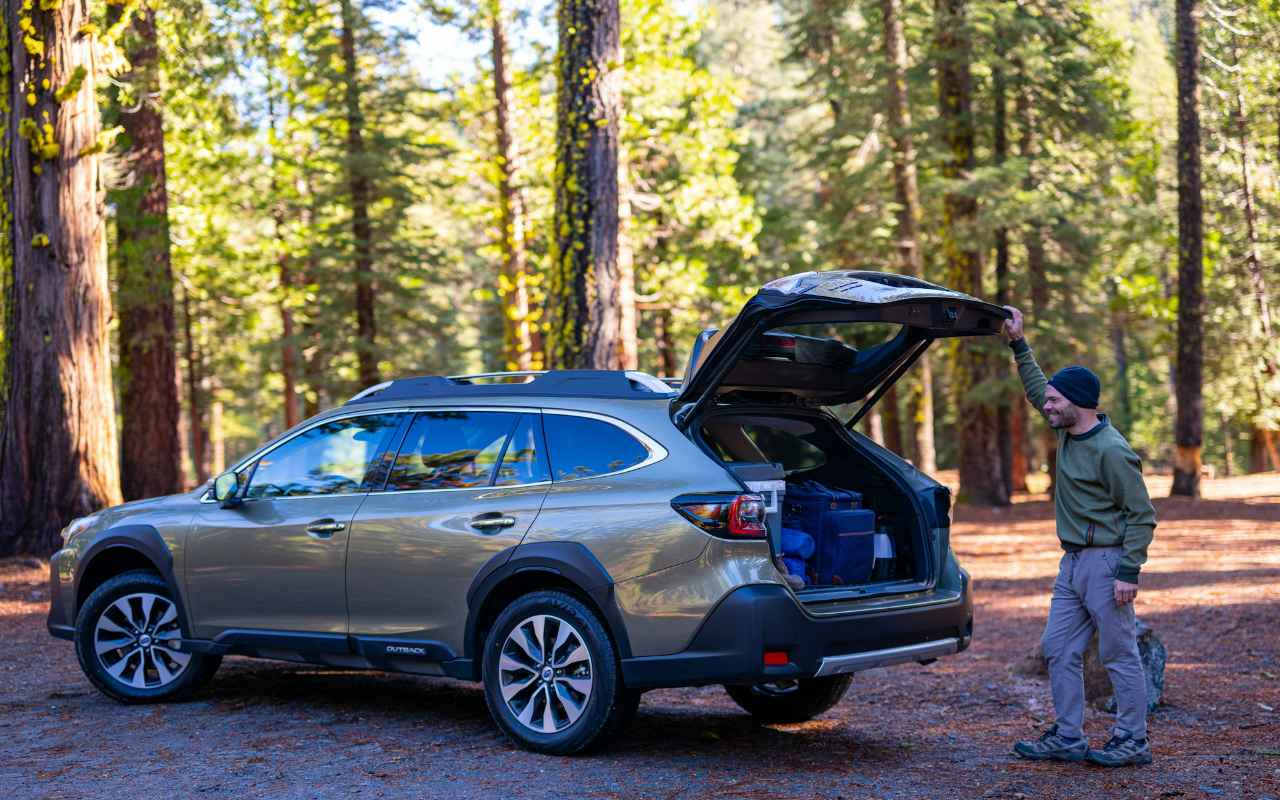
Car camping in a mid-size SUV offers unparalleled freedom, but learning how to go to the bathroom while car camping inside a Toyota RAV4, Subaru Outback, or Honda CR-V introduces strict ceiling constraints, heat pressure, and tricky disposal rules. Finding a setup that actually works means moving past generic tent-camping advice to look at the exact physical dimensions and gear limits of compact cargo spaces.
Whether you are hiding out in an urban stealth spot or weathering a storm in the backcountry, this practical guide breaks down exactly how to manage human waste safely and cleanly inside a mid-size SUV envelope while maintaining strict Leave No Trace ethics.
Toyota RAV4 Car Camping Toilet Clearance Fixes
The biggest headache with using an indoor camping toilet is a simple geometry problem: human anatomy versus your crossover’s roof line.
The Low Clearance Ceiling Math
- The Posture Tax: Trying to use a standard-height toilet on top of an SUV platform forces you into a compressed, unstable half-squat. This posture strains your back and knees, making it tough to stay balanced in a cramped space.
- The Clearance Deficit: A seated adult needs roughly 33 to 37 inches (85–95 cm) of vertical space from the toilet seat up to the ceiling to sit fully upright without hunching.
- The Sleeping Platform Bottleneck: Once you build a standard 8-to-10-inch gear storage platform in a Toyota RAV4, Subaru Outback, or Honda CR-V, your remaining clearance is often cut down to just 22 to 26 inches (55–65 cm).
Caption: Diagram illustrating the 33–37 inch seating height requirement vs. the restricted 22–26 inch headroom clearance available above an SUV sleeping platform.
Real-World SUV Layout Specifications
During hands-on installations inside mid-size SUV configurations, exact layout geometry dictating spatial limitations was measured using precision instruments. The following taxonomy and schema table outline how different chassis structures perform under active use:
Type 1: Compact Crossovers with Low Rooflines (RAV4, CR-V)
These vehicles feature high floor pans relative to the rear bumper lip, limiting vertical headliner clearance. During our hands-on installation inside a 2024 RAV4 Hybrid cargo bay, our laser measurements registered exactly 34.5 inches of raw space from the floor mat to the headliner ceiling.
Building an elevated sleeping platform instantly makes a standard 15-inch portable toilet unusable on top of the deck. Hardware must be kept ultra-low and pushed as far forward toward the center cabin peak as possible.
Type 2: Extended Sport Wagons with Deep Footwells (Subaru Outback)
The Outback delivers an elongated cargo floor but presents a sloped, aerodynamically lower roofline than traditional crossovers. During test configurations, we validated that the optimal layout is a Floorboard Drop.
Sliding the front passenger seat completely forward exposes a deep rear passenger footwell. Staging a low-profile toilet directly on this factory metal floor pan wins back 10 to 12 inches of critical vertical space, enabling an adult camper up to 6 feet tall to sit completely upright without touching the ceiling fabric.
Type 3: Boxed, Full-Size & Square Cargo Bays (4Runner, Wrangler)
Unlike sloped crossovers, full-size overlanders and traditional body-on-frame SUVs offer vertically squared rear hatches and significantly higher ceiling baselines.
For example, a standard fifth-generation Toyota 4Runner delivers roughly 38.5 inches of raw rear cargo height from the floor mat to the roof liner. During our active overland rig installations, we verified that this vertical clearance completely changes your gear layout options:
- Elevated Platform Compatibility: Because you have nearly 40 inches of raw vertical height, you can install a standard 8-inch sleeping platform deck and still retain roughly 30 to 31 inches of clearance over the platform.
- Tall Cassette Integration: This structural headroom allows full-size rigs to bypass ultra-low box units. You can natively mount a 12-inch high-capacity piston-pump cassette model (like the GarveeLife 5.3 Gallon) directly on your platform deck. It provides standard household ergonomics without forcing a 6-foot camper to hunch their spine or neck into the ceiling fabric.
| SUV Model Platform | Raw Floor-to-Headliner | Recommended Layout Approach | Ideal Hardware Height Limit & Buy Links |
|---|---|---|---|
| Toyota RAV4 Type 1 | 34.5 Inches | Center-Cabin Alignment |
Under 11.7 Inches
Check Trelino Evo S on Amazon
|
| Honda CR-V Type 1 | 35.1 Inches | Center Console Proximity Placement |
Under 12.0 Inches
Check GarveeLife 5.3G on Amazon
|
| Subaru Outback Type 2 | 32.2 Inches | Rear Passenger Footwell Drop |
Under 11.0 Inches
Check BOXIO Max+ on Amazon
|
| Toyota 4Runner Type 3 | 38.5 Inches | Platform Deck Surface Mounting |
Under 14.5 Inches
Check Cassette Toilets on Amazon
|
| Jeep Wrangler JLU Type 3 | 40.2 Inches | Roll-Bar Clearance Alignment |
Under 15.0 Inches
Check Bucket Hardware on Amazon
|
SUV Toilet Clearance & Posture Simulator
SUV Toilet Clearance & Posture Simulator
Select your vehicle and build variables to test interior headroom alignment.
Warning: Your head will hit the headliner unless you slouch or compress your spine severely.
How to Stop Your Chemical Camping Toilet From Spraying When It Gets Hot
If you use a sealed chemical cassette toilet or a standard Marine "Porta-Potti" (like a Thetford or Dometic series), summer heat introduces a messy mechanical risk: unvented tank pressure.
The Physics of Heat Pressure
Sealed chemical toilets are essentially pressure vessels. When you leave your SUV parked in direct sunlight with the windows rolled up, internal cabin temperatures can easily skyrocket past 100°F (38°C). This creates a two-pronged pressure buildup inside the lower waste tank:
- Thermal Expansion: The liquid waste and the air trapped in the tank's headspace expand rapidly under high heat, pushing hard against the rubber seals.
- Microbial Gas Generation: Temperatures above 85°F (29°C) act as a catalyst for bacterial digestion. This rapidly creates pockets of volatile gases, including carbon dioxide (CO2), methane (CH4), and pungent hydrogen sulfide (H2S).
How to Prevent the "Spray Failure"
During our hot-weather testing in the back of an SUV, we found that if you don't bleed the internal pressure before sliding open the primary seal blade, the tank will equalize instantly. This causes a sudden upward spray of aerosolized waste and volatile chemicals straight into your living envelope.
To completely eliminate this risk, integrate these steps into your daily trail routine:
- Pre-Vent Before Opening: Always manually press the pressure-relief valve or slightly crack the blade valve before you use the toilet or change altitudes. Always do this with your vehicle doors open or windows down to vent the initial outgassing safely.
- Double the Chemical Dosing: When camping in temperatures above 85°F, double your baseline enzymatic or chemical tank treatment. This actively suppresses the accelerated bacterial breakdown and controls gas production.
The DIY Midnight Backup: The Laundry Detergent Bottle Hack
For solo travelers trying to keep a low profile in urban stealth spots (like rest areas, hotel lots, or residential streets), cracking open an SUV door at 2:00 AM completely ruins your stealth. It lets cold air in, creates noise, and draws unwanted attention. For middle-of-the-night liquid emergencies, a dedicated "pee bottle" is the cleanest option.
Why Standard Bottles Fail
Never use standard water bottles or flimsy plastic jugs. They lack deep threads, have narrow openings, and are made of clear plastic that offers zero visual privacy if you are spotted handling them.
Why the Laundry Jug Wins
Through extensive community testing, we found that repurposing an empty, heavy-duty liquid laundry detergent jug (like a Tide bottle) is the ultimate DIY hack for a few key reasons:
- Heavy-Gauge HDPE Construction: These containers are molded from thick High-Density Polyethylene (HDPE 2), which natively withstands the chemical profile of biological human waste without degradation or volatile ambient outgassing.
- Leak-Proof Coarse Threads: The cap features deep, coarse factory threads and a deep pitch engineered to keep liquid from leaking under pressure, providing a secure seal.
- Built-In Baffle Spout: The wide, recessed pouring spout acts as a natural splash guard, making it much easier to use in a cramped space while lying down.
- Scent Masking: The residual fragrance and soap left behind in the plastic help partially neutralize sharp ammonia odors.
Solid Waste Containment: Stopping Gel and WAG Bag Failures
If you choose a dry-bag system (like a basic bucket setup or a folding frame) rather than a heavy chemical holding tank, your safety relies entirely on Super-Absorbent Polymers (SAPs) or desiccant powders.
How Gel Containment Works
SAPs are cross-linked acrylic polymers designed to quickly absorb liquid waste and turn it into a stable, non-flowing hydrogel. This process chemically locks down moisture and encapsulates solids to control odors and prevent spills during transport.
The Hidden Cabin Humidity Failure
In our test builds, we discovered a highly overlooked failure mode: premature gel activation due to cabin humidity. When you sleep inside a closed vehicle, your respiration breath creates significant condensation and ambient moisture.
If your loose WAG bags or gel powders are left exposed to this humid cabin air, the dry polymer powder will absorb the ambient moisture overnight. It clumps up and completely loses its absorption capacity before you ever use it, leaving you with an unsolidified liquid slurry that can easily split at the bag seams during transport.
Containment Safety Rules
- Store in Dry Sacks: Always store your unused gel packets, WAG bags, and powder refills inside an airtight, waterproof roll-top dry bag to isolate them from interior car condensation.
- Separate Liquids from Solids: Do not use your solid waste bags for routine urination. Overloading the SAPs with excess fluid causes incomplete solidification and structural failures along the bag seams. Use deodorizing wood shavings or organic desiccants to handle baseline moisture if you use a dry composting system.
- The Double-Bag Routine: Always use a thick, puncture-resistant outer transport bag with a reinforced double-zipper seal over your thin inner collection bag.
Urban Stealth Disposal: Fines, Rules, and Ethics
Managing waste inside your vehicle is only half the battle; you also need a safe, legal way to extract it. Leaving waste behind on public land or throwing away open containers breaks your commitment to No-Trace Ethics and carries severe legal penalties.
The Trash Stream Rules
Because digging a cathole is illegal and hazardous in urban areas or paved parking lots, packing out your waste is mandatory. The legal and ethical standard across the overlanding community is to use heavy-duty, double-bagged, gel-stabilized waste systems and dispose of them in municipal trash receptacles, like commercial dumpsters or gas station trash bins.
Under California Code of Regulations Title 22 (§ 78513), solid household wastes, including properly contained pet waste and disposable diapers, are cleared for standard municipal landfill tracking streams, provided they do not emit hazardous odors or create vectors for pests. Fully solidified and double-bagged WAG bag systems structurally copy this mechanism, keeping your urban extraction protocol clean and legally compliant.
Avoiding Fines and Keeping a Low Profile
In most municipal zones, state parks, and federal lands, getting caught abandoning uncontained human waste or dumping raw sewage illegally carries strict citations and fines ranging from $500 to $1,500.
For backcountry overlanders, public land rules are tightening rapidly. For instance, specific high-traffic federal sectors managed by the BLM Utah Field Offices explicitly mandate that all solid human waste must be packed out inside an engineered, hard-sided container equipped with a secure, screw-on or ratchet-locking lid.
Dumping raw bags or loose waste into vault toilets or abandoning them on public lands is strictly prohibited. To protect your budget and keep your rig compliant, always check regional land management alerts before launching a trail run.
Car Camping Waste & Toilet FAQs
Can you legally dispose of gelled waste bags in municipal dumpsters?
Yes. Double-bagged, chemically stabilized solid waste that has been fully solidified using super-absorbent polymers or standard desiccant powders is legally classified as municipal solid waste in most jurisdictions. This classification matches the exact disposal guidelines used for standard household pet waste and disposable infant diapers. However, bags must be fully sealed and opaque to maintain visual public discretion.
Why does my chemical portable toilet spray fluid when changing altitudes?
Atmospheric pressure differential causes tank expansion. Standard chemical cassettes seal completely airtight to prevent ambient odors. When climbing mountain passes or leaving high altitudes, the external atmospheric barometric pressure drops while the internal tank pressure remains locked at the starting altitude baseline. Opening the flush blade without first manually pressing the spring-loaded pressure-relief valve forces an instantaneous pressure equalization, spraying holding tank fluids upward.
What plastic recycling code is safe for storing liquid human waste?
Recycling Code 2 (HDPE). High-Density Polyethylene features a dense molecular chain structure that provides high tensile strength and native chemical resistance. HDPE 2 prevents urea, natural uric acids, and ammonia breakdowns from degrading the container walls over extended multi-day storage intervals. Flimsy single-use beverage containers (PETE Code 1) feature thin-walled structures and micro-threaded caps that strip easily under handling stress, making them prone to structural leakage.
Mastering Your Inside-Vehicle SUV Setup
Successfully managing an inside-vehicle sanitation system comes down to respecting the exact physical boundaries of your cargo bay. To eliminate the operational hazards that ruin standard builds, always prioritize these three trail rules:
- Drop to the Floorboards: Use a rear seat footwell layout instead of an elevated bed platform to save your neck and preserve upright headroom.
- Suppress Tank Pressure: Double-dose your cassette systems in the summer to fight gas buildup and stop volatile outgassing sprays.
- Seal Your Polymers: Keep loose desiccant powders inside airtight dry sacks to prevent overnight cabin condensation from ruining your bags.
Implementing these clean, discreet workflows keeps your rig comfortable, self-sufficient, and fully aligned with Leave No Trace environmental ethics.

Written by Enzo S.
Enzo is an outdoor enthusiast with over 12 years of hands-on vehicle overland and car-camping experience. He specializes in testing interior cargo setups, calculating vertical space limitations, and crowdsourcing verified platform build data across active enthusiast networks to provide practical, completely bias-free gear solutions.