Affiliate Disclosure: As an Amazon Associate, I earn from qualifying purchases. If you purchase through our links, we may earn a small commission at no extra cost to you.
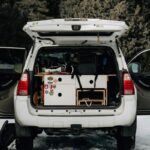
This fitment dossier was built by crowdsourcing real-world setup logs, generation-specific trunk measurements, and interior layout debates from dedicated Subaru owner forums and wilderness trail networks. Optimizing a camping mattress for your Subaru Forester requires navigating a boxy but challenging cargo cabin defined by a strict width bottleneck, a steep rear seat incline, and an aggressive battery management system.
While the Forester offers excellent vertical headroom due to its tall compact-SUV silhouette, off-the-shelf mattresses rarely account for the physical constraints of its unique load floor geometry. To construct a flat, stable sleeping horizon that eliminates back strain, your overlanding setup must design around fixed wheel-well plastics, a 40cm front row gap, and systemic electrical parasitic draws.
Technical Fitment Matrix: Top Subaru Forester Mattress Configurations


The 43-Inch Wheel-Well Pinch: Why Standard Queen Mattresses Fail
A common pitfall highlighted in overlander trail tests is attempting to drop a standard domestic Queen mattress into the rear of a Subaru Forester. While a household Queen spans 60 inches wide, the hard structural boundary between the Forester’s inner plastic wheel-well liners measures exactly 43.3 inches of clear horizontal track width.
Forcing an oversized mattress or a generic “SUV air bed” into this space causes the fabric edges to pinch, bunch, and curl upward violently against the plastic trim. This reduction in horizontal surface area stresses air seams, accelerates overnight deflation, and forces sleepers toward the center of the cabin.
- The Full-Size Threshold Squeeze: Community logs on r/CampingGear indicate that a standard Full-size mattress—measuring roughly 53 to 54 inches wide—is the absolute maximum physical boundary the Forester cabin can accommodate. The mattress will experience a slight, localized squeeze at the wheel arches, but flexible foam or open-cell air perimeters can compress past the 43.3-inch bottleneck without compromising the sleep horizon.
- Contoured Aftermarket Layouts: To achieve a completely flat, edge-to-edge layout without side buckling, experienced overlanders utilize custom-fit mattresses tapered at the foot-end to 41 or 42 inches wide. This allows the mattress to drop flush into the trunk pan while expanding back outward to full cabin width at the shoulder and door levels.
The “Not Actually Flat” Incline and the 40cm Headrest Void
Despite promotional literature claiming that the Forester’s second-row seats fold flat, community field logs on subaruforester.org confirm that the folded seatbacks create a permanent 5-to-10-degree upward incline that is completely non-coplanar with the rear cargo floorboards.
Sleeping directly on this surface causes your body and sleeping bags to gradually slide toward the rear liftgate throughout the night, leading to bunched bedding and lower back stiffness by morning.
Furthermore, pushing the front seats forward to unlock maximum sleeping length exposes a massive 40cm (approximately 16-inch) open abyss directly behind the front center console.
- The Sub-Floor Leveling Platform Solution: To neutralize the slope, forum builders construct basic cargo floor leveling decks. Laying down a small platform in the trunk raises the lower cargo floor to match the height of the folded seatbacks exactly. This platform can be extended outward to span the 40cm gap completely, catching your pillows and establishing a continuous, unyielding sleep plane across the entire cabin length.
- The Inflatable “Block” Filler Trick: For campers who want to avoid heavy wooden platform carpentry, overlander trail tests rely on specialized inflatable footwell wedges or dedicated cube extenders. These blocks rest on the rear passenger footwells and provide a stable, pressurized foundation that prevents the head-end of the mattress from collapsing into the void.
- The Feet-in-Gap Workaround: For solo travelers under 5’8″ on zero-cost setups, a pragmatic community trick is to reverse your sleeping orientation entirely. Sleeping “head-to-tailgate” places your heavy upper body on the flat rear section of the vehicle, letting your feet dangle harmlessly over the 40cm second-row void.
The Electrical Battery Trap: Navigating Switched Outlets and Parasitic Loads
Running 12V ventilation fans or portable refrigerators overnight inside a modern Forester requires strict adherence to automotive battery management physics. Unlike older utility rigs, the Forester’s factory electrical architecture is highly vulnerable to deep discharge cycles, a problem compounded by built-in system behaviors:
- The Switched Circuit Lockdown: The Forester’s stock 12V cargo accessory outlets are not factory always-on. They are hardwired to cut power completely the moment the ignition is switched off, preventing you from running 12V appliances directly from the car’s auxiliary sockets overnight.
- The Starlink Parasitic Draw Factor: Community tracking across enthusiast forums highlights that 2019–2024 Foresters experience a continuous backend parasitic draw stemming from the integrated Starlink telematics module. Because the vehicle’s computer networks frequently fail to enter low-power sleep modes while parked, the stock starter battery is already operating under a higher electronic load before any camping accessories are plugged in.
- The Hatch-Open Power Drain Fluke: Leaving the large rear liftgate wide open to expand your camp living area keeps the vehicle’s Body Control Module (BCM) fully energized. This triggers active ECU statuses that will entirely drain the stock starter battery to a “no-start” condition over extended multi-day basecamp stays.
- The Portable Power Station Isolation Rule: To ensure you are never stranded in the backcountry with a dead vehicle system, trail guides dictate isolating your camping gear completely from the car’s starter circuit. Bypassing the vehicle’s 12V layout to run all ventilation fans and fridges off an independent lithium portable power station (such as a Jackery or Goal Zero) keeps your vehicle battery pristine, safely recharging the battery bank off the accessory socket only while the engine is running and the alternator is actively spinning.
Technical Fitment Matrix: Top Subaru Forester Mattress Configurations
To guarantee a perfect fit, cross-reference your Forester’s tight 43.3-inch wheel-well boundary line with these field-tested mattress configurations available on Amazon:
| Product Model | Architecture Type | Thickness | Weight | R-Value | Packed Size | Key Pros & Cons | Amazon Link |
|---|---|---|---|---|---|---|---|
| ROXGOX Twin Trifold | 2-Layer Gel Memory Foam & HD Base Blend | 6.0 Inches | ~21.5 lbs | Est. ~1.5 – 2.2* | 38″ x 25″ x 18″ (Folded Cube) |
Thick 6-inch polyfoam core natively irons out the Forester’s 10-degree seat slope transitions without sagging. Rectangular profile requires a small lateral squeeze between the 43.3-inch plastic wheel arches. | Check Price |
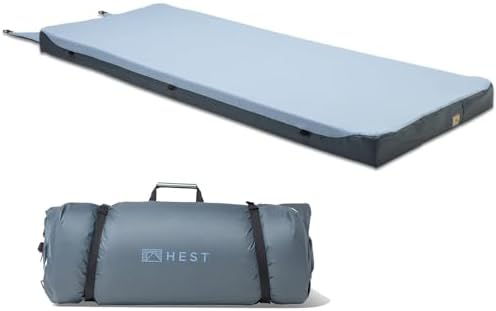
| HEST Foamy (Regular) | Dual-Layer Temperature-Resilient Memory Foam | 3.9 Inches | 11.0 lbs | 8.8 R-Value | 25″ x 12″ (Rolled Cylinder) |
Premium cold-resilient foam prevents freezing weather cellular locking. Single 25-inch sleeping track drops perfectly flat between wheel wells but accentuates the unlevel trunk slope unless a leveling base is used. | Check Price |
| Exped MegaMat Duo 10 | Self-Inflating Open-Cell Foam Hybrid (Medium) | 4.0 Inches | 7.28 lbs (7 lbs 4.5 oz) |
8.1 (ASTM) | 22.0″ x 11.0″ (Packed Tube) |
Official 72″ x 41.0″ layout drops completely flat between the Forester’s narrow wheel-well bottleneck with zero border bunching. Elite winter insulation rating, but requires extensive body compression to deflate. | Check Price |
Final Verdict: Which Subaru Forester Sleep System Wins?
Selecting your ultimate Subaru Forester sleeping configuration requires matching your transit packing volume threshold with your tolerance for cabin geometry corrections:
- The Absolute Best Overall Performance Setup: For double-occupancy camping and true four-season isolation over raw sheet metal, nothing beats the Exped MegaMat Duo 10 Medium. Its 41.0-inch width drops flat into the Forester’s narrow wheel-well bottleneck with zero border bunching, while its high R-value stops cold air drafts from radiating upward through the spare tire hatch.
- The Best Long-Term Orthopedic Setup: If you want a solid, static foam foundation that naturally irons out the Forester’s unlevel 10-degree seat slope transitions without requiring a complex platform build, deploy the ultra-thick ROXGOX Twin Trifold. The 6-inch dual-layer polyfoam core bridges height drops natively at an affordable price.
- The Premium Solo Overlander Pick: For single explorers who prioritize quick camp deployments and maximum rear storage space, choose the HEST Foamy (Regular). At 25 inches wide, it rolls down into a compact cylinder alongside your heavy storage bins, leaving half the cargo floor wide open for refrigerators and portable gear.
Frequently Asked Questions (FAQ)
Can you fit a Queen mattress in a Subaru Forester for camping?
No. A standard household Queen mattress is 60 inches wide, whereas the narrowest distance between the Subaru Forester’s rear plastic wheel wells is exactly 43.3 inches. Forcing a Queen air bed inside will cause the sides to curl up violently against the windows and side panels, heavily restricting your sleeping space and stressing fabric seams.
Do the back seats fold completely flat in a Subaru Forester?
No. While marketed to fold flat, the folded second-row seatbacks in the Forester retain a permanent 5-to-10-degree upward incline that is non-coplanar with the main trunk floorboard. Campers counteract this overnight sliding slope by building a shallow trunk leveling platform or utilizing graduated cargo leveling pads.
Will leaving the Forester tailgate open drain the vehicle battery?
Yes. Leaving the rear liftgate open keeps the Forester’s body control modules and interior cargo dome lights fully energized, which can drain the factory starter battery down below critical cranking thresholds overnight. It is heavily recommended to run all camping accessories off an independent portable power station to keep the starter battery isolated.

Written by Enzo S.
Enzo is an outdoor enthusiast with over 12 years of hands-on vehicle overland and car-camping experience. He specializes in testing interior cargo setups, calculating vertical space limitations, and crowdsourcing verified platform build data across active enthusiast networks to provide practical, completely bias-free gear solutions.