Affiliate Disclosure: As an Amazon Associate, I earn from qualifying purchases. If you purchase through our links, we may earn a small commission at no extra cost to you.
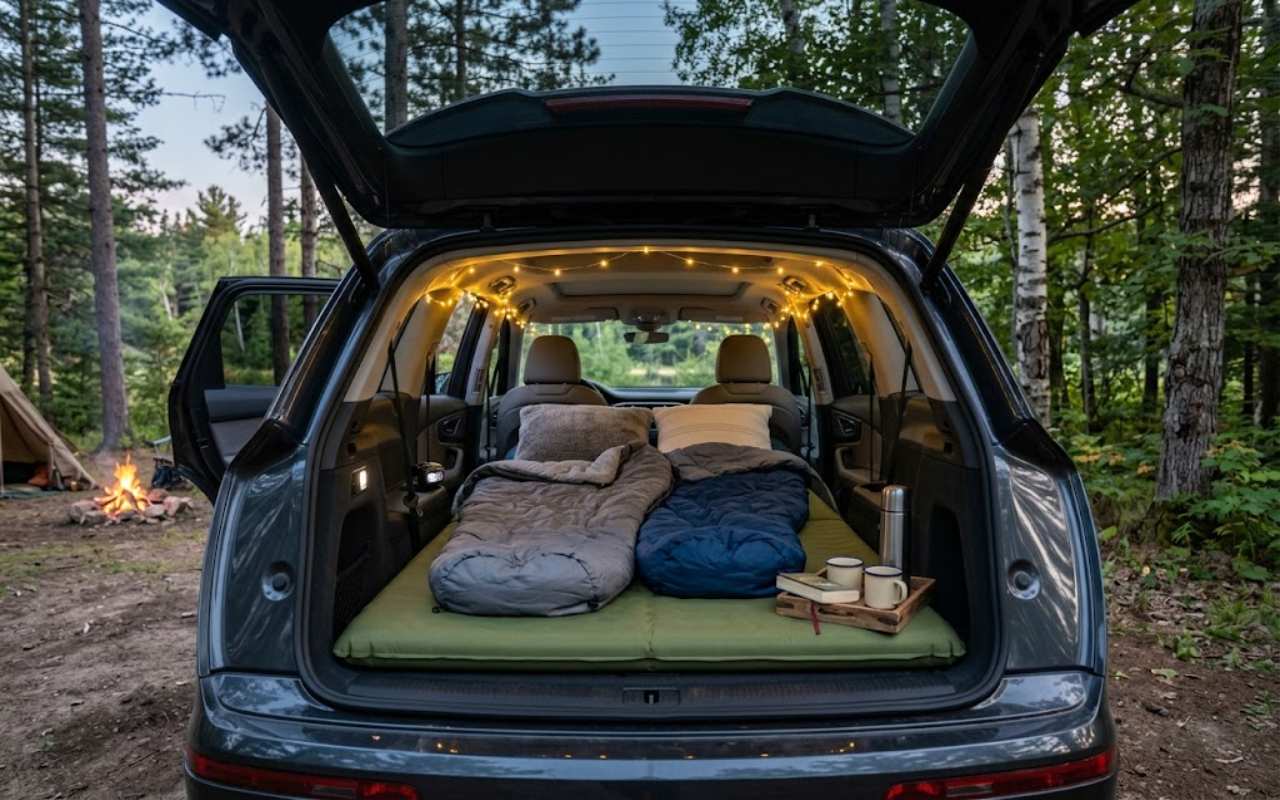
To compile this definitive overlander dossier, I conducted a deep-dive audit of real-world field logs, trial threads, and vehicle layout discussions across overlander communities like Reddit and expedition forums. Skipping standard inflatable air beds eliminates the chronic risk of middle-of-the-night deflation, but transitioning to a pure foam setup introduces an entirely separate set of physical challenges inside a vehicle cabin.
Selecting a non-inflatable car camping mattress requires balancing foam density metrics with spatial storage constraints and cabin temperature shifts that directly affect material stiffness. To establish a stable, long-lasting platform that avoids bottoming out on the unyielding sheet metal or plastic lining of your vehicle’s floorboards, you must design your sleep layout around real-world overlander tests, ergonomic science, and physical data constraints.
The Top Candidates at a Glance


The “Bottoming Out” Trap: High-Density Support Rules
Many beginner campers purchase generic, low-cost tri-fold foam mattresses online only to discover that their hips and shoulders press completely through the material overnight. Because the floor of an SUV or trunk is completely rigid, soft memory foam fails to distribute body weight properly for side sleepers, pushing the spine out of alignment.
- The IFD Specification Rule: Independent mattress modification tests reveal that a reliable non-inflatable vehicle build requires a support layer with an Indentation Force Deflection (IFD) rating between 35 and 50 IFD.
- The ASTM D3574 Standard: Standard foam grading metrics defined by ASTM International (Method B1) dictate that IFD measures the physical pounds required to compress a 4-inch sample piece of foam by 25%.
- The Testing Apparatus: This measurement is executed using a specialized 50-square-inch circular indenter foot.
- The Specimen Boundary: The actual test specimen block must be significantly larger—typically 15″ x 15″ (225 square inches)—to ensure edge pressures do not falsify the reading.
- Industry Naming Standard: While the current ASTM D3574 standard dictates “Indentation Force Deflection” (IFD) as the formal term, the commercial mattress and shipping industries continue to use the older term “Indentation Load Deflection” (ILD) completely interchangeably to describe this identical measurement.
- The Orthopedic Alignment Factor: According to orthopedic sleep ergonomics guidelines, a dual-layer system utilizes a high-IFD base to prevent pelvic sinkage, while the top comfort foam keeps spinal alignment neutral for side sleepers.
- Skeletal Support Base: A resilient, firm support core handles deep skeletal support.
- Pressure Relief Point: This structural staging ensures that the heavier shoulder and hip areas are cradled cleanly.
- Floor Isolation Boundary: The targeted dual-density layout completely prevents your primary joints from ever making contact with the hard vehicle floorboards beneath.
The Temperature Fluke: Cold Weather Material Realities
An inherent, frequently overlooked property of visco-elastic polyurethane memory foam is its high sensitivity to environmental temperature variables. Because the chemical structure reacts directly to ambient air conditions, your mattress density will fluctuate drastically depending on the weather.
The Mechanical Set Mitigation: Over long trips, localized body heat creates a permanent compression spot in the foam. You must physically rotate and flip your foam mattress periodically to distribute wear and keep the cell structures from collapsing prematurely.
The True Glass Transition Region (Tg): Traditional visco-elastic consumer memory foam is chemically engineered so that its molecular glass transition temperature (Tg) threshold sits right around standard room temperature or slightly below—typically 0°C to 15°C (32°F to 59°F).
Molecular Freezing: Because its transition point sits near room temperature, memory foam responds seamlessly to body heat, but it also means the material stiffens up drastically during a chilly car camping night.
As ambient cabin temperatures drop toward freezing, internal polymer chain relaxation slows down significantly, and the cell walls lock into a rigid state well before outdoor sub-zero parameters are reached.
Conversely, premium overlanding mattresses utilize specialized high-performance open-cell polyfoams specifically formulated to maintain micro-cellular elasticity far down past freezing coordinates.
Bridging the Backseat Void: The Zero-Cost Storage Hack
Folding down the second-row passenger seats unlocks the length needed to sleep inside an SUV, but it exposes a structural 10-to-12-inch empty gap between the front seat consoles and the rear seatbacks. Without support, a flexible non-inflatable foam mattress will sag directly into this void, causing pillows to drop into the footwells and deleting up to 8 inches of usable sleeping length.
- The Gear-in-Gap Method: Tightly packing your soft-sided duffel bags, heavy food totes, or extra clothing bags directly into the rear footwells creates a flush, continuous extension of the seatbacks.
- The Headrest Reversal Alternate: If your vehicle’s second-row seats feature adjustable headrests, trail tests show you can pull them out, turn them around, and insert them backwards. This projects the padded headrest frame forward across the void, adding a natural structural ledge to catch the top edge of your foam padding.
Visual Overlander Guide: Bridging The Backseat Void
Ventilation, Condensation, and Moisture Management
Sleeping inside a completely sealed SUV cabin causes human respiration to saturate the confined air volume rapidly. On cool mornings, this results in heavy interior window frost or excessive condensation dripping down the plastic side panels onto your bedding fabric.
- The Mesh Window Sock Solution: Install breathable, slip-over mesh window screen socks or rigid plastic rain guards on the rear doors. This allows you to crack the glass 2 to 3 inches for continuous cross-ventilation while keeping mosquitoes and rain out.
- The Morning Wipe-Down Protocol: To prevent mold, mildew, and dampness from permanently nesting in your vehicle’s fabric roof lining, keep a dedicated microfiber towel handy. Always wipe down the interior glass completely every morning before deflating your mattress or packing your sleeping bags back into your storage totes.
Storage Logistics and Vertical Headroom Limitations
The primary penalty of choosing a solid foam mattress over an air bed is the massive loss of interior cargo volume and vertical headroom. Because foam cannot dump its air volume instantly, managing its physical footprint during day-drive transit requires strategic folding layouts or multi-layered gear setups.
- The Storage Cube Penalty: A standard 6-inch tri-fold mattress measures a spacious 75 inches long when flat, but it folds up into a massive, blocky 38″ x 25″ x 18″ structural cube.
- Trunk Space Reduction: In a compact SUV, this single item can instantly devour up to 30% of your total trunk cargo space.
- Packing Constraint: This layout footprint forces you to pack other gear bags tightly around it.
- The Vertical Clearance Math: Deploying a thick 6-inch tri-fold mattress inside a standard crossover SUV (such as a Toyota RAV4 or Subaru Outback) with a typical 31.5-inch cargo height leaves you with exactly 25.5 inches of vertical clearance.
- Physical Height Constraint: This means that any camper over 5’10” will likely press their head directly against the ceiling headliner when sitting up.
- Cabin Layout Limitation: This restriction limits your interior space to a “sleep-only” setup.
- The Hybrid Floor Anomaly: Furthermore, users operating hybrid SUV models must account for integrated battery pack floor elevations.
- The Seat Hinge Lip: These battery compartments often form an unexpected, unlevel lip behind the second-row hinge, further reducing actual headroom.
- The Closed-Cell Foam (CCF) Stacking Strategy: To achieve excellent orthopedic support without losing massive headroom, overlanders utilize a low-profile stacking layout.
- The Floor Foundation Base: Laying an indestructible, ultra-compact accordion pad like the Therm-a-Rest Z Lite Sol directly on the vehicle floor adds an additive 2.0 insulation rating thanks to its reflective ThermaCapture coating.
- The Balanced Topper Layer: Capping it with a thinner 3-inch high-density foam topper provides deep pressure relief.
- Clearance Optimization Outcome: This dual-pad combination works effectively while reducing overall transit bulk and preserving overhead clearance.
- The Cot + Pad Deployment: For car campers managing chronic back pain, pairing a highly collapsible camping cot with a thin foam mattress completely transforms the vehicle interior.
- Under-Platform Cargo Recovery: Elevating your sleep platform unlocks massive, uninterrupted storage space directly beneath your bed frame for storage totes and recovery gear.
- Hardware Isolation Boundary: This elevated framework configuration keeps your body completely isolated from uneven seat folding hardware.
Elite Product Recommendations: Vetted Foam Options
To bypass generic retail marketing lists, the overlanding community relies on specific, field-tested models that satisfy strict dimensional, thermal, and material parameters:
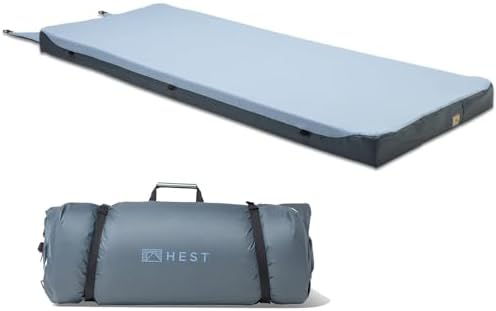
The Premium Overlander Pick: HEST Foamy
The HEST Foamy Camping Mat is engineered specifically for freezing vehicle platforms. It completely bypasses standard consumer memory foam flaws by utilizing two layers of specialized, high-performance polyfoams sourced specifically to remain elastic and supportive in severe cold, avoiding the severe cell-locking issues of standard temperature-sensitive consumer foams.
The high-density polyfoam base prevents bottoming out on rigid metal cargo floors, while the specialized comfort top polyfoam layer maintains structural plushness deep into sub-freezing winter parameters. The cover features a highly functional hybrid material build: the top is a breathable, stretch polyester dirt-proof layer, while the bottom construction utilizes a rugged, waterproof nylon fabric to protect against trail debris.
The Vertical-Wall Luxury Pick: Therm-a-Rest MondoKing 3D
For car campers who prioritize premium camp comfort but cannot accommodate the crushing physical weight of a massive guest mattress, the Therm-a-Rest MondoKing 3D Self-Inflating Mattress stands out as an elite overlanding solution. This 4.25-inch thick mattress relies on a self-inflating, open-cell foam core that automatically expands when the dual valves are opened, cutting down on physical setup labor at the end of a long trail drive.
Unlike traditional air beds or standard foam blocks that feature tapered, sloped borders, the MondoKing is engineered with a 3D vertical sidewall construction. This structural geometric profile allows the mattress to sit completely flush against your SUV’s side plastic panels and storage boxes, maximizing every square inch of your interior sleep surface.
With an officially lab-vetted 7.0 R-value insulation capacity under standard testing baselines, it serves as a true winter-rated barrier that stops cold ground drafts from radiating through the vehicle’s metal chassis. It packs a heavy-duty punch while remaining remarkably lightweight, scaling between 4.37 to 5.50 lbs (4 lbs. 6 oz. to 5 lbs. 8 oz.) depending on whether you deploy the Twin/Large or the massive XXL footprint on your cargo floorboard.
Crucial Overlanding Note: While its internal open-cell matrix handles deep orthopedic skeletal support with ease, the mattress rolls down into a long, stiff 26″ x 10″ cylindrical roll during day-transit phases. Before purchasing, verify your vehicle’s vertical packing height clear space to ensure this long cylinder won’t obstruct secondary gear bag placement or cooler access.
The Budget Tri-Fold Pick: ROXGOX 6-Inch Memory Foam Trifold Mattress
For a reliable, highly available budget setup, the ROXGOX 6-Inch Memory Foam Trifold Mattress serves as an excellent in-stock alternative to erratic residential supply runs. To protect side sleepers from making hip contact with hard SUV floorboards, this 6.0-inch thick configuration matches the structural staging rule by deploying a supportive, high-density polyfoam base underneath an adaptive memory foam comfort top.
Encased inside a soft, removable, and machine-washable zip cover equipped with a non-slip traction bottom, it establishes a reliable orthopedic sleep foundation across rugged cargo tracking lines.
Because vehicle space and sleeping arrangements vary wildly on the trail, this 6-inch model is contextually relevant across its four main layout footprints:
- Twin Size (75″ x 38″ x 6″): Weighing 21.5 pounds, this single-sleeper profile folds down to a tight 25″ x 38″ x 18″ cube, making it ideal for compact single-side layouts that leave half the trunk completely open for food coolers and tool storage.
- Full Size (73″ x 52″ x 6″): Folds down to a 24″ x 52″ x 18″ footprint, creating a snug fit for couples inside smaller mid-size crossovers.
- Queen Size (78″ x 58″ x 6″): Folds up into a blocky 26″ x 58″ x 18″ container layout, maximizing wall-to-wall surface coverage for full-size cargo trunks.
- King Size (80″ x 76″ x 6″): Folds down to 27″ x 76″ x 18″, which is best reserved for massive truck bed platform configurations or large overland van layouts.
Crucial Overlanding Note: Unlike specialized outdoor gear, standard retail trifolds utilize soft cover fabrics that lack heavy weatherproofing. To safeguard the bottom layer from absorbing raw vehicle condensation overnight, you should pair this mattress with a plastic vapor layout sheet or a closed-cell accordion mat foundation.
The Hybrid Exception (An Inflatable Outlier)
If your vehicle interior absolutely cannot accommodate the massive transit footprint of a pure solid foam mattress, you must pivot away from our strict “non-inflatable” rule. In this specific scenario, premium self-inflating open-cell hybrids like the Exped MegaMat Duo offer the only viable compromise.
Pure foam cannot dump its air volume instantly, forcing a massive storage trade-off. To bypass this, open-cell self-inflating hybrids use low-pressure air channels to allow the foam core to compress down to a fraction of its active size during transit.
The Exped MegaMat Duo and MegaMat Auto utilize an innovative open-cell foam core encased inside low-pressure air channels. Because the air pressure handles a portion of the deep structural support, the internal foam matrix can be rolled down into a highly compressed format during transit.
Note: While this hybrid format greatly reduces depth bulk compared to solid square blocks, it still occupies significant linear transit length, as it rolls into a long, rigid cylinder rather than folding flat—often requiring horizontal orientation across your rear backseat footprint.
Technical Gear & Vehicle Fitment Matrix
To guarantee a perfect fit, you must measure the narrowest horizontal distance between your vehicle’s rear plastic interior panels. Most popular compact SUVs feature a wheel-well clearance width of only 39.4 to 43.5 inches, meaning standard domestic Twin mattresses (typically 38 inches wide) fit tightly, while traditional Full or Double pads will pinch, buckle, and bend at the sides.
Popular SUV Cargo Dimensions Reference
| Vehicle Model | Narrowest Cargo Track Width | Fitment Optimization Impact |
|---|---|---|
| Subaru Outback (Gen 6) | 43.3 Inches | Clears an Exped Medium or HEST Foamy cleanly with zero edge crimping. |
| Toyota RAV4 (Gen 5) | 39.4 Inches | Absolute narrowest clearance threshold; standard 38″ twins experience high lateral border friction. |
| Honda CR-V (Gen 5) | 41.3 Inches | Requires flexible foam configurations to wrap cleanly around floor anchors. |
Complete Technical Matrix & Specifications (Pure Foam Formats)
| Product Name | Core Type | True Thickness | Physical Weight | R-Value Insulation | Packed Dimensions | Key Pros & Cons |
|---|---|---|---|---|---|---|
| HEST Foamy | Dual-Density Open-Cell Polyfoam System | 3.9 Inches |
9.5 – 13.0 lbs (Short: 9.5 lbs | Regular: 11 lbs | Wide: 13 lbs) |
8.8 (Extreme Cold Rated) |
Cylindrical Roll Profile (Short: 25″x10″ | Regular: 25″x12″ | Wide: 30″x12″) |
Pro: Specialized polyfoam avoids cold weather cell crystallization; heavy-duty waterproof nylon lower boundary blocks vehicle floor condensation. Con: Pure solid foam setup means it cannot dump its air volume instantly; demands a notable transit footprint. |
| ROXGOX Trifold Mattress | Dual-Layer Gel Memory Foam & Support Base | 6.0 Inches |
21.5 – 36.8 lbs (Twin: 21.5 lbs | Full: 29.1 lbs | Queen: 34 lbs | King: 36.8 lbs) |
Est. ~1.5 – 2.0 (Non-insulated)* |
Tri-Fold Shape (Twin: 25″x38″x18″ | Full: 24″x52″x18″ | Queen: 26″x58″x18″ | King: 27″x76″x18″) |
Pro: Premium dual-layer pressure-relieving construction with cooling gel memory foam; offers multiple sizing profiles up to King; features a removable, machine-washable zippered cover and a highly stable non-slip base. Con: Substantial weight scaling up to 36.8 lbs and a standard tri-fold transit footprint make it bulky to transport compared to specialized rolling camping pads; unrated for extreme sub-zero weather insulation. |
| Therm-A-Rest MondoKing 3D | Self-Inflating Open-Cell Foam System | 4.25 Inches |
4 lbs 6 oz – 5 lbs 8 oz (Large: 4 lbs 6 oz | XX-Large: 5 lbs 8 oz) |
7.0 (ASTM F3340 Certified) |
Cylindrical Roll Shape (Large: 26″x10.3″ | XX-Large: 31″x10.3″) |
Pro: Vertical side walls maximize completely flat, edge-to-edge usable sleeping surface; outstanding warmth-to-weight ratio for winter basecamps. Con: Long cylindrical rolled profile requires careful planning when packing tight car trunks or vehicle cargo boxes. |
| Exped MegaMat Duo | Self-Inflating Open-Cell Foam Build | 4.0 Inches |
7 lbs 4.4 oz – 11 lbs 14 oz (M: 7 lbs 4.4 oz | LW+: 9 lbs 11 oz | Queen: 11 lbs 14 oz) |
8.1 (ASTM F3340 Certified) |
Cylindrical Roll Shape (M: 22″x11″ | LW+: 27.6″x11.8″ | Queen: 31.5″x11.8″) |
Pro: Thermally certified down to extreme sub-zero conditions (-40°F); premium open-cell internal support protects pressure joints for side-sleepers. Con: Demands complete, intensive manual air extraction and body weight compression when rolling down into its transit sleeve. |
Final Verdict: Which Non-Inflatable Sleeping Platform Wins?
Selecting your ultimate non-inflatable car camping mattress comes down to matching your vehicle’s cargo layout constraints with your available daytime transit storage bulk. Based on real-world overlander trial logs and material performance data, we recommend pinning your sleep build setup to one of four definitive directions:
- The Absolute Best Overall Performance Setup: For true four-season durability and deep freeze protection, the HEST Foamy dominates. Its specialized cold-resilient polyfoam core entirely bypasses the cell-locking freezing issues of traditional memory foam, while its heavy-duty waterproof nylon lower boundary perfectly blocks raw vehicle floorboard condensation.
- The Best Edge-to-Edge Flat-Wall Setup: If your vehicle interior features tight horizontal choke points and you want to maximize your sleeping footprint, opt for the Therm-a-Rest MondoKing 3D. Its engineered 3D vertical sidewall construction allows it to sit completely flush against your SUV’s side plastic panels without buckling or creasing at the edge seams.
- The Best Space-Saving Transit Hybrid: If your vehicle absolutely cannot accommodate the massive, unyielding storage volume of a pure solid foam mat, the open-cell hybrid Exped MegaMat Duo is your only viable compromise. By utilizing low-pressure air channels, it compresses down into a fraction of its active size, offering an elite 8.1 ASTM certified R-value without devouring your cargo hold during transit.
- The Best Budget-Friendly Static Option: If you want a thick, plug-and-play structure that flattens out vehicle floor drops without an expensive initial investment, the high-density ROXGOX 6-Inch Memory Foam Trifold Mattress provides an immediate, highly supportive orthopedic solution at a fraction of the cost.

Written by Enzo S.
Enzo is an outdoor enthusiast with over 12 years of hands-on vehicle overland and car-camping experience. He specializes in testing interior cargo setups, calculating vertical space limitations, and crowdsourcing verified platform build data across active enthusiast networks to provide practical, completely bias-free gear solutions.