Affiliate Disclosure: As an Amazon Associate, I earn from qualifying purchases. If you purchase through our links, we may earn a small commission at no extra cost to you.
Yes, Canadian residents can legally sleep in their car for free on General Use provincial Crown land for up to 21 days per site per calendar year in Ontario (before relocating at least 100 meters) or up to 14 consecutive days in British Columbia, provided you park off active roads, boat launches, and day-use parking lots. Non-residents of Canada (including U.S. road-trippers aged 18 and older) must purchase an Ontario Crown Land Camping Permit ($10.57 CAD per person per night) to camp north of the French and Mattawa Rivers and are banned entirely from designated “Green Zones,” while campers aged 18+ in Alberta’s Eastern Slopes need a Public Lands Camping Pass.
Yes, you can sleep in your car on Crown land in Canada—provided you separate General Use provincial land from roads, boat launches, municipal land, and Crown agency parcels. Provincial Conservation Officers treat an occupied SUV or camper van as a regulated “camping unit” subject to strict stay limits and non-resident permit laws.
While roughly 89% of Canada’s landmass is Crown land, pulling over at a highway gravel pit, public boat ramp, or BC Hydro pull-off frequently triggers trespass warnings, tickets, or court-convicted fines reaching $1,500 to $2,500 CAD for egregious violations.
Drawing on provincial Crown land statutes, enforcement advisories, and Canadian overlander reports across r/CrownLandCamping, r/britishcolumbia, CanoeTripping.net, and Alberta Outdoorsmen Forum, this guide breaks down the exact stay limits, non-resident permit rules, highway rest-stop distinctions, and mapping verification steps for sleeping safely in your vehicle across Canada.
Vehicle Sleeping vs. “Crown Land Camping”: The Pull-Off Trap
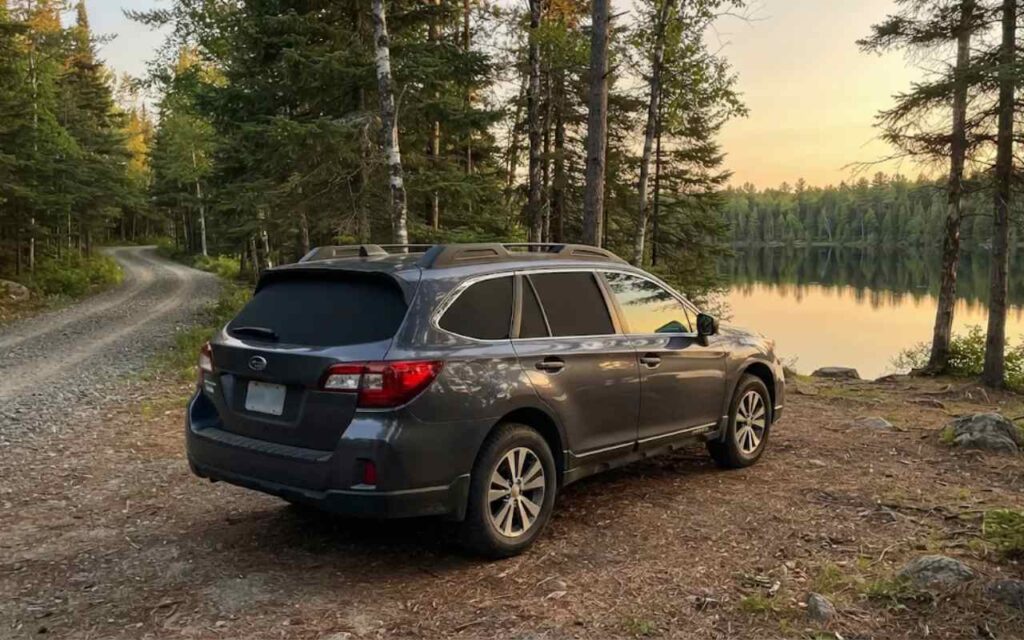
Under provincial public-land regulations, sleeping inside a car, crossover SUV, pickup truck, or camper van counts as occupying a camping unit, carrying the exact same legal privileges and restrictions as pitching a ground tent.
Why Highway Gravel Pits, Boat Launches & Rest Stops Are Different
- No Camping on Roads, Parking Lots, or Boat Launches: Official Ontario Crown land recreation rules explicitly prohibit camping on roads, parking areas, or boat launches. Community observations on r/britishcolumbia and iOverlander confirm that sleeping in a car at a highway pull-off or lake boat ramp blocks morning anglers and invites immediate eviction or fines from Conservation Officers and RCMP/OPP patrols.
- Highway Rest Areas vs. True Crown Land: Many road-trippers confuse provincial highway rest areas with Crown land. According to British Columbia Provincial Rest Areas guidelines, highway rest areas are provided strictly for motorist rest breaks with overnight camping prohibited, and Ontario MTO rest stops and ONroute plazas similarly enforce short-term transit limits rather than multi-day Crown land stays.
- The “Crown Agency” & Municipal Land Trap: Forum discussions on r/britishcolumbia highlight that land held by Crown corporations (such as BC Hydro reservoirs) or local municipalities is treated like private or restricted property, meaning campers who assume every unposted turnout is open provincial Crown land “will get the boot.”
- Routine Tickets vs. Court-Convicted Fines: While standard set tickets for minor parking or permit infractions are smaller, Ontario Ministry of Natural Resources (MNR) enforcement records show that court convictions for multi-month squatting, illegal structures, or dumping garbage on Crown land regularly reach $1,500 to $2,500 CAD.
Provincial Stay Limits, Non-Resident Permits & “Green Zones”
Canada does not have a single federal dispersed-camping rule like U.S. BLM land (see our free overnight legal parking guide if you are crossing south of the border); every province enforces its own stay caps and permit fees.
Comparing Canadian Crown Land Car Camping Rules by Province
| Province / Region | Max Free Stay & Move Rule | Permit Requirements & Restricted Zones |
|---|---|---|
| Ontario (General Use Crown Land) | 21 Days / Calendar Year (Relocate ≥ 100 Meters) | Free for Canadian residents. Non-residents (18+) must buy a Crown Land Camping Permit ($10.57 CAD/person/night) north of the French/Mattawa Rivers and are banned from “Green Zones.” |
| British Columbia (Crown Land & Rec Sites) | 14 Consecutive Days | Free for residents and visitors on unreserved Crown land and non-fee Rec Sites; excludes municipalities, BC Hydro land, leases, and posted closures. |
| Alberta (Public Land Use Zones) | 14 Days (Move ≥ 1 km for 72 Hours) | Requires a paid Public Lands Camping Pass ($20 for 3 days / $30 annual + fees) for campers aged 18+ along the Eastern Slopes; camping banned within 1 km of roads in select PLUZs. |
Ontario’s Non-Resident Permit, “Green Zones” & Other Provinces
- Who Must Buy the Ontario Permit: Under Ontario Regulation 326/94, any non-resident of Canada aged 18 or older (including U.S. citizens) camping on Crown land north of the French and Mattawa Rivers must purchase a Crown Land Camping Permit ($10.57 CAD per person per night, including HST) via ServiceOntario or the Natural Resources Information Portal (NRIP). Exemptions apply only to children under 18, non-residents who own real property in Ontario (and their spouses), or travelers renting a camper/camping unit directly from an Ontario-based business.
- The “Green Zone” Ban: As community members on CanoeTripping.net emphasize, buying a non-resident permit does not allow you to camp in designated “Green Zones” (Enhanced Management Areas created to prevent overcrowding and protect fisheries in popular cottage-country corridors). Green Zones are strictly reserved for Canadian residents year-round.
- Alberta Pass Exemptions: Along Alberta’s Eastern Slopes (managed through Government of Alberta public land portals), the Public Lands Camping Pass applies to campers aged 18 and older and exempts First Nations Status cardholders as well as eligible social-assistance recipients.
- Quebec & Atlantic Canada Rules: Quebec manages large tracts of public forest through Zones d’exploitation contrôlée (ZECs) that charge daily access and camping fees; outside ZECs, check local MRC/RCM rules, as some regions (such as MRC Pontiac) require a low-cost temporary permit on open Crown land. Meanwhile, Nova Scotia and New Brunswick permit free low-impact camping on unleased, unreserved provincial Crown land away from highways and developed parks (note that New Brunswick prohibits RVs within 75 meters of waterway shorelines, though passenger cars and tents are permitted).
Mapping Traps & Active Logging Road Safety
Even when you follow stay limits and permit laws, two trail-level hazards catch car campers off guard across Canadian Crown land: digital map boundary errors and industrial forestry traffic.
Avoiding Private Timber Trespass, Logging Trucks & Bear Hazards
- Cross-Checking CLUPA, iMapBC & iHunter Layers: Community reports on r/britishcolumbia, Alberta Outdoorsmen Forum, and Ontario Outdoors warn that relying on a basic GPS pin frequently leads to accidental trespass on private timber holdings, Crown leases, Conservation Reserves, or First Nations reserve lands (which are private property). Always enable private-parcel, lease, and reserve overlays in Ontario’s Crown Land Use Policy Atlas (CLUPA), BC’s iMapBC, or the paid iHunter Public Land Access layer, and never cross private land to reach a “landlocked” Crown parcel without landowner permission.
- Logging Truck Right-of-Way & VHF Radio Licensing Rules: Forestry Service Roads (FSRs) in BC and resource roads in Northern Ontario are active industrial haul routes where loaded logging trucks always have the legal right-of-way. Overlanders on r/britishcolumbia and ClubTread advise sticking to weekend travel when log hauling pauses, watching for locked forestry gates that can close behind you overnight, and monitoring Resource Road (RR) kilometer calls—noting that transmitting on RR VHF channels in Canada legally requires Innovation, Science and Economic Development Canada (ISED) radio authorization and approved commercial/marine radio hardware rather than uncertified handheld transceivers.
- Bear-Country Food Storage: In grizzly and black-bear country where unserviced Crown land has no steel bear lockers, store all food and scented gear in a padlocked IGBC-certified bear-resistant cooler rather than relying on soft plastic bags inside your vehicle (see our full SUV bear-proofing guide).
Quick Gear Picks: Essential Canadian Backcountry Navigation & Safety Gear
- Best Offline Satellite Navigator: Garmin inReach Mini 2 Satellite Communicator provides two-way SOS messaging and GPS waypoint/breadcrumb tracking on-device (plus full topographic maps when paired with the free Garmin Explore smartphone app) deep down cellular-dead Ontario and BC logging roads (Backcountry Safety Essential).
- Best Roadside & Trail Tire Backup: VIAIR 84P Portable 12V Tire Inflator Compressor plugs into your SUV’s 12V socket so you can air down on sharp shale Forestry Service Roads (FSRs) and reinflate safely before returning to paved highways (Resource-Road Tire Essential).
- Best Bear-Country Food Locker: YETI Tundra 45 Hard Cooler (IGBC-certified bear-resistant when locked with two corner padlocks) protects food and scented items on unserviced Crown land sites that lack steel campground bear boxes (Wildlife Compliance Pick).
Canadian Crown Land Car Camping FAQ
Can U.S. citizens sleep in their car for free on Crown land in Ontario?
Only south of the French and Mattawa Rivers where General Use Crown land permits exist, or if you qualify for an exemption (such as owning property in Ontario or renting a camper van from an Ontario business). North of the French and Mattawa Rivers, non-residents aged 18 and older must purchase an Ontario Crown Land Camping Permit ($10.57 CAD per person per night) and cannot camp in designated “Green Zones” at all.
Does sleeping inside an SUV count toward Ontario’s 21-day Crown land limit?
Yes, Ontario’s Ministry of Natural Resources classifies a vehicle, camper van, trailer, or tent as a “camping unit,” limiting stays to 21 days per site per calendar year. After 21 days, you must move your vehicle and all gear at least 100 meters away to a new site, and court convictions for squatting or dumping garbage on Crown land regularly reach $1,500 to $2,500 CAD.
Can you sleep in your car at a boat launch or gravel pull-off on Crown land?
No, free Crown land camping permissions do not apply to roads, highway pull-offs, parking lots, or public boat launches. Parking overnight at a boat launch or Crown agency lot (such as BC Hydro land) can result in trespass warnings, towing, or Conservation Officer fines.
Pre-Trip Checklist for Legal Crown Land Car Camping in Canada
Sleeping in your SUV on Canadian Crown land is completely legal and free for residents when you verify land tenure and trail access before dark:
- Confirm General Use Crown Status: Verify your exact GPS spot on CLUPA (Ontario), iMapBC (BC), or iHunter with private, lease, and First Nations reserve layers turned on.
- Check Stay Caps & Regional Passes: Obey Ontario’s 21-day / 100-meter rule (and buy a non-resident permit if visiting from outside Canada), BC’s 14-day limit, or Alberta’s Public Lands Camping Pass.
- Respect Industrial Roads & Wildlife: Yield to logging trucks on resource roads, watch for seasonal forestry gates, carry a Garmin inReach Mini 2 and VIAIR 84P compressor, and lock food inside an IGBC-certified cooler.
Written by Enzo S.
Enzo is an outdoor enthusiast with over 12 years of hands-on vehicle overland and car-camping experience. He specializes in testing interior cargo setups, calculating vertical space limitations, and crowdsourcing verified platform build data across active enthusiast networks to provide practical, completely bias-free gear solutions.