Affiliate Disclosure: As an Amazon Associate, I earn from qualifying purchases. If you purchase through our links, we may earn a small commission at no extra cost to you.
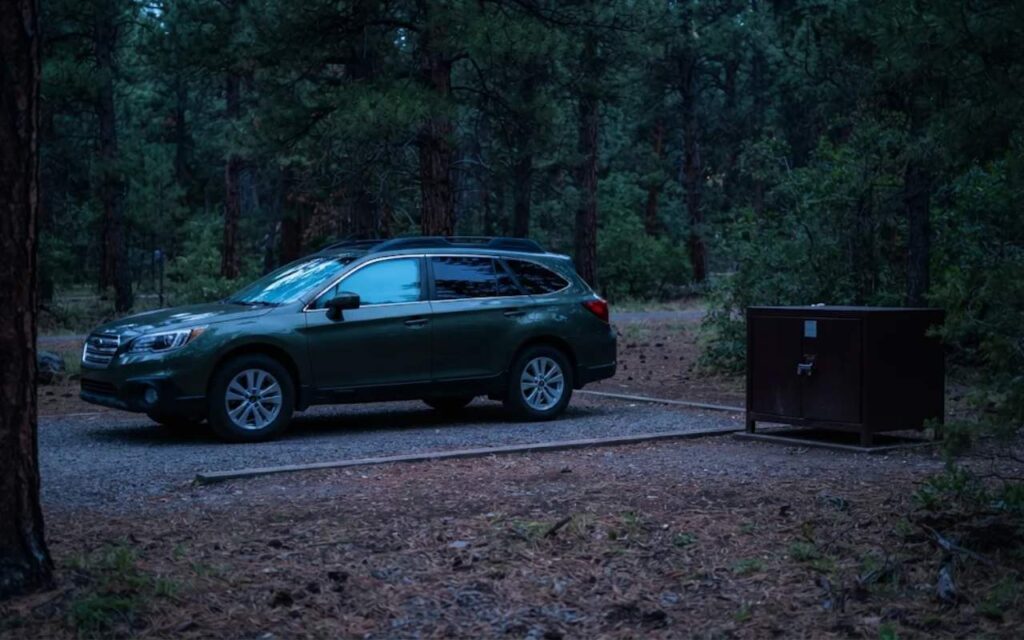
To bear proof your SUV while sleeping inside, roll every window completely shut, lock all doors while shielding proximity key fobs, and transfer every food item, cooler, and scented toiletry into a steel campground bear locker overnight. While a closed steel vehicle acts as a strong physical barrier against bears, leaving a window cracked even one inch gives black bears claw leverage to bend the glass frame, and sleeping alongside scented coolers violates strict National Park Service regulations in parks like Yosemite.
Learning how to bear proof your SUV while sleeping inside requires eliminating three distinct mechanical and behavioral vulnerabilities: window glass leverage, proximity key-fob auto-unlocking, and residual cabin odors.
A hard-sided crossover or SUV offers dramatically better protection than a nylon ground tent, yet habituated bears across North American parks routinely peel back cracked windows, pull paddle-style door handles, and smash into vehicles containing visible coolers.
Drawing on wildlife agency guidelines from BearWise, National Park Service (NPS) and USDA Forest Service food-storage regulations, and overlander vehicle-testing notes, this guide breaks down the exact locking protocols, food-containment rules, and night deterrent strategies for sleeping safely in bear country.
Quick Gear Picks: Verified Bear-Country Vehicle Essentials
- Best Certified Bear-Resistant Cooler: YETI Tundra 45 Hard Cooler (IGBC-certified bear-resistant when secured with two long-shackle padlocks on both front corners) isolates food odors during daytime transit (Premium Investment).
- Best Smart-Key Signal Blocker: Mission Darkness Non-Window Faraday Bag for Key Fobs blocks wireless RFID/NFC signals inside the cabin so exterior door handles cannot auto-unlock when touched (Budget Security Staple).
- Best Secondary Odor-Barrier Liners: Loksak Opsak Odor-Proof Barrier Bags (12″ x 20″) use multi-layer gas-impermeable film to seal snacks, toiletries, and trash before locking them inside a steel bear box (Low-Cost Multi-Pack).
The Window Ventilation Dilemma: Why “Cracked Windows” Fail in Bear Country
Standard car-camping advice tells campers to crack two windows by one to two inches overnight to prevent interior condensation. However, wildlife safety guidelines from BearWise and the USDA Forest Service warn that this standard ventilation habit becomes a structural liability in habituated bear zones.
The Physics of Glass Leverage & Frame Bending
- Claw Purchase on Tempered Glass: Automotive side windows are made of tempered glass engineered to resist blunt impacts against their flat face, yet they are vulnerable to concentrated prying pressure along an exposed top edge. According to BearWise wildlife safety guidance, black bears are strong enough to hook their claws into a one-to-two-inch gap and peel the glass downward or bend the upper door frame outward.
- Minimal Cooling Benefit: Leaving a car window cracked one inch offers minimal overnight cooling inside a stationary vehicle while creating an immediate mechanical entry point for a bear’s paws.
- No Window Vent Is Bear-Resistant: Overlander hardware discussions confirm that while fabric door socks and rigid plastic or aluminum channel vents block mosquitoes in standard campgrounds, zero window vent inserts carry Interagency Grizzly Bear Committee (IGBC) certification. The IGBC Certified Products List covers bear-resistant food-storage containers, coolers, dumpsters, garbage cans, food lockers, panniers, and electric fencing, never vehicle window screens.
Safe Cabin Ventilation Protocol in Bear Zones
- Keep All Windows 100% Rolled Up: In active black-bear or grizzly corridors, roll every side window, sunroof, and rear hatch glass completely shut before going to sleep.
- Manage Morning Condensation with Microfiber Towels: Because an adult releases roughly half a pint to a pint of moisture overnight through breathing and skin evaporation, sleeping in a sealed SUV will fog the interior glass. Keep a dedicated absorbent microfiber towel within reach to wipe down the windshield before driving rather than sacrificing physical security for airflow.
Door-Handle Mechanics & Proximity Key-Fob Auto-Unlock Traps
Modern crossovers and SUVs rely on exterior lever or paddle-style door handles, which is the exact handle geometry habituated black bears have learned to pull downward with their paws. Overlander field reports from IH8MUD and Reddit confirm that while locking your doors stops bears from opening the cabin (even if a bear scratches or breaks the plastic exterior handle), modern keyless-entry systems introduce a hidden electronic trap.
How Proximity Fobs Accidentally Unlock Doors
- The Cabin Proximity Zone: Many push-to-start SUVs use capacitive touch sensors behind the exterior door handles. If your smart key fob is sitting near the front center console or door pocket while you sleep inside, the vehicle’s exterior antennas can mistake the fob for standing right outside the door, allowing a bear’s paw brushing against the handle to trigger auto-unlock.
- Two-Step Locking & Signal Shielding: Verified vehicle security procedures highlight two reliable ways to prevent electronic auto-unlocking while sleeping inside:
- Use an RFID Faraday Pouch: Place your primary and spare smart key fobs inside a closed Mission Darkness Non-Window Faraday Bag for Key Fobs once you are locked inside for the night. Blocking the wireless signal disables exterior touch-handle sensors completely while keeping the fob ready to pull out in seconds.
- Use Vehicle-Specific Keyless Disable Settings: On Toyota and Lexus smart keys (2016 and newer), holding the Lock button while pressing the Unlock button twice puts the fob into battery-saving sleep mode so it stops transmitting proximity signals. On Ford vehicles, holding Lock and Unlock only toggles between one-stage and two-stage door unlocking; to disable passive entry on a Ford SUV, turn off Intelligent Access / Passive Entry inside your dashboard or SYNC settings menu.
Food Storage Laws: Sierra Black-Bear Country vs. Grizzly Country
The most debated question across overlanding forums is whether you can sleep inside your SUV alongside a locked cooler. The legal answer depends entirely on which national park or forest jurisdiction you enter, because Yosemite, Sequoia and Kings Canyon, and Northern Rockies grizzly parks enforce distinct regulations.
Regional Food-Storage Rules Comparison
(Note: Verify current Superintendent’s Compendium rules via official National Park Service Yosemite food-storage regulations or your destination park’s .gov page before arrival, as regional bear activity triggers seasonal emergency closures.)
| Region / Park System | Overnight Vehicle Food Rule | Mandatory Action Before Sleeping |
|---|---|---|
| Yosemite National Park (Sierra Black Bears) | Zero Food or Scented Items Allowed Overnight | Transfer every cooler, grocery bag, toiletry, and trash sack into a steel campground bear locker before dark. |
| Sequoia & Kings Canyon (SEKI) | Metal Bear Lockers Mandatory Where Provided | Use steel bear boxes in all campgrounds; in frontcountry areas without lockers, store food inside a locked trunk or completely out of sight with rolled-up windows. |
| Yellowstone / Glacier (Grizzly & Black Bears) | Hard-Sided Vehicle Permitted (With Strict Rules) | Keep all windows rolled up, doors locked, and food/coolers completely out of sight (use steel bear lockers whenever available). |
| National Forest Dispersed Camping (No Bear Boxes) | IGBC-Certified Padlocked Cooler Required | Store food inside a padlocked IGBC-certified cooler (such as a YETI Tundra) sealed with Opsak liners. |
Critical Gear Rules for Coolers & Canisters
- Padlocks Are Mandatory for IGBC Compliance: Overlander discussions on Expedition Portal and official IGBC testing standards confirm that an IGBC-certified cooler (such as a YETI Tundra 45 Hard Cooler) is not bear-resistant using its rubber latches alone. You must install two heavy-duty padlocks through the molded corner lock ports to prevent a bear from popping the lid.
- Never Keep a Backpacking Bear Canister Inside Your SUV: Experienced campers warn against storing a cylindrical backpacking bear canister inside a parked car. Bears recognize canister shapes through windows and will smash car glass or rip off door frames trying to reach the container inside. Always place backpacking canisters on the ground at least 100 yards downwind from your vehicle.
Scent Cleanup & Night Deterrents: Key-Fob Alarms vs. Bear Spray
Bears rely on both an acute sense of smell and visual recognition of food packaging. Even an empty SUV can draw a bear if food grease or scented items linger on exterior surfaces.
Eliminating Exterior & Interior Scent Traps
- Wipe Down Door Handles Before Bed: Campground safety checklists highlight a frequently overlooked attractant: cooking grease or snack residue transferred from your hands onto exterior door handles and liftgate latches. Wipe exterior handles clean with plain water or an unscented wipe before turning in, and avoid heavily perfumed citrus or floral wipes, which can attract curious bears on their own.
- Clear Cupholders & Treat Roof Boxes as Scent Sources: Never leave gum, lip balm, scented wet wipes, or empty drink cans in center console cupholders. Seal all garbage inside Loksak Opsak Odor-Proof Barrier Bags using proven odor-proof SUV camping trash storage systems, and remember that hard-shell roof-rack cargo boxes are not bear-resistant, so never leave food or trash on your roof rack overnight.
Emergency Response If a Bear Tests Your Vehicle
- First-Line Deterrent (The Key-Fob Panic Alarm): Just as outlined in our safety guide on sleeping in your car at highway rest stops, if a bear rocks your SUV or paws at the doors at night, do not open the door or roll down a window. Keep your key fob within arm’s reach on your sleeping platform (pulled out of its Faraday pouch if needed) and trigger the red panic alarm button. Real-world campground reports confirm that the sudden blast of the vehicle horn and flashing headlights is the safest, most effective way to startle a bear away from your vehicle.
- Bear Spray Inside a Closed Cabin Is a Last Resort: Outdoor safety guides warn strongly against discharging bear spray inside a closed SUV, as aerosolized capsaicin blowback will immediately incapacitate everyone inside the cabin. If you carry bear spray for daytime hiking, store it inside a dedicated protective hard case so extreme cabin heat or shifting gear cannot depress the trigger. Note also that possessing bear spray is prohibited inside Yosemite, Sequoia, Kings Canyon, Lassen Volcanic, and Redwood National Parks under California National Park regulations.
Bear-Proof SUV Sleeping FAQ
Can a black bear break into a locked SUV with the windows rolled up?
While bears possess enough strength to peel open cracked windows or rip off exterior plastic door handles, a fully locked SUV with rolled-up glass and zero visible food rarely suffers forced entry. Almost all vehicle break-ins occur when owners leave doors unlocked, leave a window cracked an inch or two, or leave coolers and food wrappers visible through the glass.
Is it legal to sleep in my car with food in Yosemite or Yellowstone?
No in Yosemite, where storing any food or scented items inside your vehicle after dark is strictly illegal even while sleeping inside, requiring you to use a steel campground bear locker. In Yellowstone, Glacier, and frontcountry areas of Sequoia and Kings Canyon (where metal lockers are not provided), sleeping inside a hard-sided vehicle with food is permitted provided all windows are rolled up, doors are locked, and every cooler or scented item is kept completely out of sight.
What should I do if a bear climbs onto my SUV hood or roof at night?
Stay inside with all doors locked and windows rolled up, and press the panic alarm button on your key fob. Never exit the vehicle to yell at the bear or attempt to drive away while the bear is on the chassis. The sudden loud horn and flashing lights will almost always cause the bear to jump down and retreat.
Mastering Safe Overnight Stays in Bear Country
Sleeping inside your SUV in bear country comes down to removing every visual, mechanical, and aromatic invitation before dark:
- Roll Up & Lock Down: Keep every window 100% closed (never cracked one inch), lock all doors, and store smart proximity fobs inside an RFID Faraday pouch (or disable keyless entry via your vehicle’s fob sleep mode or dashboard settings) so exterior handles cannot auto-unlock.
- Empty the Cabin of Scents: Transfer all food, coolers, toiletries, and trash into a steel campground bear locker, or use a padlocked IGBC-certified cooler sealed with Opsak barrier bags where lockers are unavailable.
- Keep Your Key Fob Handy: Place your fob within reach on your sleeping platform so you can trigger the panic alarm horn immediately if a bear investigates your vehicle.

Written by Enzo S.
Enzo is an outdoor enthusiast with over 12 years of hands-on vehicle overland and car-camping experience. He specializes in testing interior cargo setups, calculating vertical space limitations, and crowdsourcing verified platform build data across active enthusiast networks to provide practical, completely bias-free gear solutions.