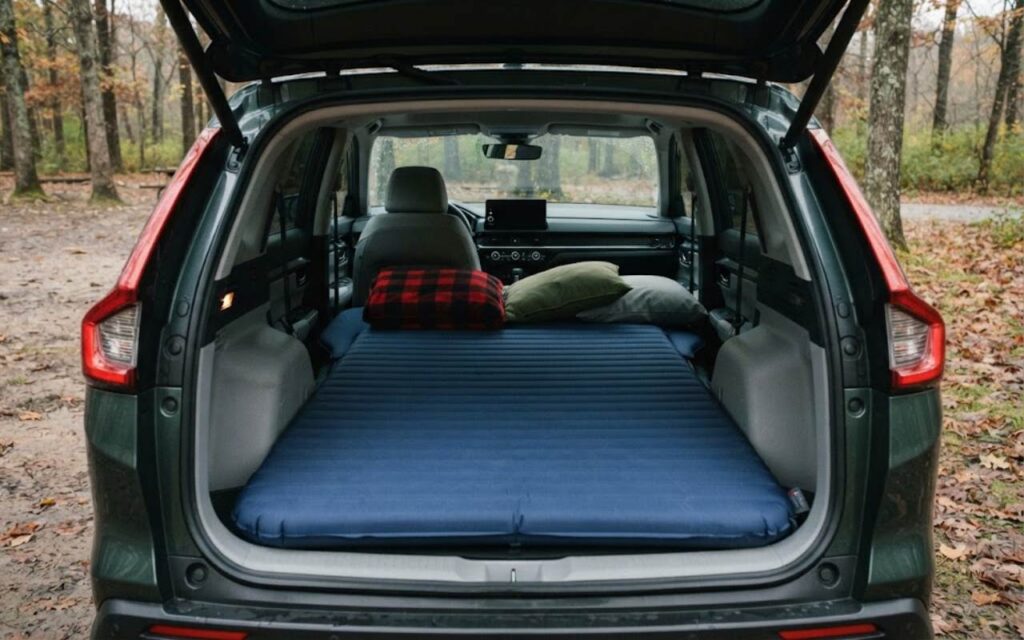
Outfitting a modern crossover vehicle for self-contained backcountry overlanding, off-grid dispersed camping, or urban stealth deployment requires strict adherence to factory chassis constraints. If you are looking to design the perfect 6th gen crv car camping setup, the vehicle platform (spanning the 2023, 2024, 2025, 2026, and upcoming 2027+ model years) provides an exceptionally well-engineered, fuel-efficient foundation.
However, its unibody design introduces hidden engineering roadblocks and structural constraints that will instantly ruin generic camping builds, cause body panel scraping, or compromise critical high-voltage vehicle electronics if they are ignored before you head into the field.
To help you skip expensive trial-and-error design mistakes, avoid permanent cabin damage, and bypass complex electronic system loops, this no-build guide breaks down the essential mechanical and electrical telemetry required to safely transform your daily driver into a highly functional mobile shelter.
The Hourglass Footprint & Mattress Clearance Obstacles
The cargo bay of the 6th-generation CR-V is not a standard, clean rectangle. The physical landscape of the interior cabin behaves as a multi-stage corridor that narrows significantly due to body panel contours.
While the mid-cabin rear shoulder room measures a wide 55.9 inches [141.99 cm] at the passenger door panels (tapering down to a rear hip room of 52.6 inches [133.60 cm]), the rear trunk floor pan closes sharply to a narrow 41.5 inches [105.41 cm] where the soft plastic rear wheel house liners intrude.
This structural variance creates a severe design trap for campers purchasing off-the-shelf overlanding equipment. Attempting to force a standard, rigid household Twin mattress or a generic rectangular camping pad (which typically measures 38 inches wide by 75 inches long) directly into the back of the CR-V causes immediate fitment failures.
Because the pad lacks custom wheel-house tapering, its edges are forced to ride up the plastic arch liners. This layout error causes the center core of the mattress to buckle and warp, severely reduces your available vertical headroom, and forces the pad’s rough material edges to scrape and gouge the soft plastic side panels with your every physical movement.
Achieving a maximum linear sleeping lane length of 72.5 inches [184.15 cm] along the vehicle’s centerline requires an exact seat-slide sequence. You must slide both the front driver and passenger seats completely forward along their tracking rails and tilt the seatbacks fully toward the dashboard.
Because the clear linear lane caps tightly at this threshold, rigid rectangular mattresses are simply too long and wide to lay flat. The mathematically optimized sleep profile for this platform demands a tapered layout.
Your sleeping surface must stay locked to a maximum width of 41.0 inches [104.14 cm] at the hips to rest flat on the floor pan without binding against the wheel house bottlenecks, while safely flaring out to exactly 52.0 to 55.0 inches [132.08–139.70 cm] at the shoulders to fully exploit the open cabin space available exclusively forward of the plastic arches.
Unlock the Complete 9-Page Master Reference Blueprint
The Ultimate Honda CR-V SUV Camping Blueprint delivers complete 9-page engineering schematics, including precise structural millimeter clearances for all 2023 through 2027+ sixth-generation model variants, lower seat housing hybrid battery cooling grilles and air filter safety parameters, inside tailgate manual latch release escape protocols, and detailed dual-window composite foam deck leveling layout templates.
The Permanent 2.5-Inch Hybrid Floor Drop-Step
Folding the second-row split seatbacks forward does not create a continuous, level sleeping plane. Instead, the folded seat frames introduce a permanent 2.5 to 3.0-inch [6.35–7.62 cm] vertical height drop-step down to the primary lower trunk floor pan.
Attempting to sleep directly over this uncorrected, uneven ledge creates severe lumbar pressure points, cuts off circulation to the lower extremities, and causes inflatable air mattresses to kink, lose air pressure, and fail.
It is critical to note that the physical fix for this roadblock varies significantly depending on your specific vehicle trim and powertrain configuration:
- Conventional Gas-Only Models (LX, EX, EX-L Trims): These variants feature an adjustable, dual-level factory cargo floor panel track system. To mitigate the drop-off, operators can manually slide the primary floorboard up into the factory upper track slots to flush the trunk floor level with the folded seatback hinges.
- Traditional Hybrid Models (Sport, Sport L, Sport Touring Trims): On these high-efficiency variants, the high-voltage hybrid traction battery array is flat-packed directly beneath the rear cargo area. Because of this component layout, the trunk floor pan is permanently fixed from the factory in the lower position and cannot be adjusted.
To cancel out this permanent vertical step drop-off on hybrid models without adding heavy, fuel-draining timber frameworks to your chassis, you must construct an ultra-lightweight composite sub-floor. This hack utilizes a custom-cut layer of 2.5-inch [6.35 cm] thick rigid extruded polystyrene (XPS) insulation board seated directly into the lower trunk well.
By topping this rigid insulation layer with a continuous sheet of high-density 0.5-inch [1.27 cm] interlocking EVA foam gym tiles across the entire combined length, you span the hinge split and cover the seam.
This establishes a flush, robust, 0-degree sleep horizon that easily supports your body weight while preserving exactly 30.5 inches [77.47 cm] of clear vertical headroom from the newly leveled deck up to the highest scalloped roofliner ceiling track.
Crucial High-Voltage Battery Airflow Constraints
For hybrid owners, the single most critical safety and liability constraint detailed inside this blueprint is the management of internal cabin airflow.
On all 6th-generation Hybrid trims, Honda houses the primary high-voltage Intelligent Power Unit (IPU) battery electronics and vital ventilation loops directly inside the lower cabin area. The system’s primary air intake grille and internal cooling fan filter are located directly on the lower rear seat side trim housing assembly panel.
When configuring an interior sleeping setup, loading heavy storage containers, or packing gear for a multi-day overlanding trip, maintaining absolute structural clearance around this lower side grille is non-negotiable. It is incredibly easy for an amateur camper to accidentally pile heavy wool blankets, sleeping pads, or bulky luggage boxes flush against this lower plastic housing.
Restricting this air-exchange loop blocks the cooling fan completely, inducing a rapid, catastrophic battery thermal loading spike. The moment the high-voltage cells overheat, the unibody computer loop will throw an immediate, flashing “Power System” critical warning light on your physical instrument cluster while logging a severe OBD-II diagnostic fault code P0A82.
This fault code forces the hybrid management system to systematically shut down or disable your overnight cabin climate control loops to protect the electronics.
To guarantee worry-free operations and preserve component health, you must maintain a completely unobstructed, clean 3.0-inch [7.62 cm] open air buffer zone around the lower seat side trim panel housing grilles at all times.
360-Degree Stealth Privacy & Moisture Physics
Wagon and crossover body lines carry expansive side glass panels. The 6th-generation CR-V features exactly 8 distinct pieces of structural glass: 1 raked windshield, 4 primary door windows, 2 small rear quarter cargo panels, and 1 large liftgate window.
Running internal electronics, charging devices, or turning on an interior light inside a completely un-shielded cabin on a dark pull-off or urban street corner causes immediate light leakages that reveal your occupied camp status from every direction. Light leaks also work in reverse, as passing headlights, ambient streetlights, and early morning solar glare will continuously disrupt the sleep cycle.
Furthermore, glass surfaces act as the cabin’s weakest thermal barriers. To establish an airtight privacy shield and block solar loading, you must cut and label a custom-fit, 8-piece matte black insulation window panel array.
When stealth camping in urban boundaries or dark trailheads, always ensure the solid matte black material face is oriented outward toward the street glass. Leaving reflective silver foil panels facing outward completely compromises your location, immediately alerting passing individuals that the vehicle is occupied.
To manage internal moisture physics, you must never seal the vehicle 100% airtight during your sleep cycle. A single resting adult human expels approximately 20 to 50 grams of ambient water vapor per hour through natural respiration and sweat.
Over a standard 8-hour sleep window, this injects between 160 and 400 grams of water directly into the tight cabin environment. Left un-vented, this heavy moisture vapor travels through the air until it meets a cold glass or metal panel, creating dense window fogging, dampening your bedding materials, and creating localized mold traps beneath your foam deck panels.
To break this humidity loop safely without compromising your privacy or allowing rainwater to enter the cabin, implement our cross-flow ventilation protocol. You must lower exactly two opposite side door windows precisely 1.0 inch [2.54 cm] to establish a reliable, low-pressure air exchange loop driven by natural outdoor currents.
To maintain this low-pressure current overnight while preventing mosquitoes, gnats, and biting bugs from invading your sleep space, you must attach custom-fit fine mesh insect netting or window screens securely over the exterior door frames.
Emergency Inside Tailgate Egress Protocols
When sleeping inside a completely buttoned-down vehicle cabin, safety dictates that you maintain a reliable, instantaneous exit route. However, a major platform roadblock on the 6th-generation CR-V is that the vehicle’s electronic smart keyless remote proximity system is hardcoded to automatically disable the exterior physical rubber liftgate trunk button when an occupant is detected inside.
If you need to exit the rear of the vehicle quickly at dawn, or if your low-voltage 12V auxiliary starter battery completely dies overnight and disables the unibody’s central locking network, you will be trapped inside the rear cargo bay.
Because the liftgate will become entirely unresponsive to standard electronic window switches or remote buttons, you must master the mechanical manual latch release shortcut built directly into the rear hatch panel:
- Locate the Access Port: Move to the absolute center base of the interior lower tailgate plastic molding panel. Locate the small, flush, rectangular plastic access slot cap.
- Pry the Panel Cap: To prevent gouging or breaking the surrounding plastic trim, do not attempt to yank it with your fingernails. Slide the physical mechanical metal key blade straight out from your keyless remote fob housing shell. Wrap the blade or a flathead utility tool inside a clean microfiber cloth, insert it into the tiny margin gap, and gently pop the rectangular cap out from the slot.
- Engage the Actuator: Peer directly into the exposed internal port hole cavity using a flashlight. Locate the white mechanical metal latch actuator lever nestled inside the latch housing frame.
- Drive Rightward: Insert your raw metal key blade or flat tool directly into the open cavity slot, press it firmly against the left face of the white nylon lever, and slide the mechanical mechanism firmly to the right side. This physical movement manual trips the lock bypass loop, instantly popping the rear tailgate open from the inside even with a completely dead car battery.

Written by Enzo S.
Enzo is an outdoor enthusiast with over 12 years of hands-on vehicle overland and car-camping experience. He specializes in testing interior cargo setups, calculating vertical space limitations, and crowdsourcing verified platform build data across active enthusiast networks to provide practical, completely bias-free gear solutions.