Affiliate Disclosure: As an Amazon Associate, I earn from qualifying purchases. If you purchase through our links, we may earn a small commission at no extra cost to you.
Mold grows under a car camping mattress platform because warm body heat and nocturnal perspiration (roughly 0.5 to 1 pint of combined skin and breath moisture per night) migrate downward through porous foam and hit a cold, unventilated plywood or metal deck, reaching the dew point right at the mattress-to-platform interface. Simply drilling holes in solid plywood or wrapping raw wood in trunk carpet still traps moisture between the holes; preventing mildew requires sealing the wood with polyurethane, maintaining a continuous 3/4-inch air gap via spaced bed slats or a dimpled ventilation mat, and airing the mattress upright after every trip.
Pinpointing what causes mold under a car camping mattress platform comes down to basic dew-point thermodynamics, because an open-cell foam mattress acts as a warm, breathable sponge sitting directly on top of a cold, non-breathable sheet of plywood or steel.
As your body releases roughly 0.5 to 1 pint (250 to 500 ml) of combined insensible perspiration and breath moisture overnight, warm humid air migrates downward through the foam until it meets the cold platform surface below, condensing into liquid water that cannot evaporate once the mattress seals against the deck.
Drawing on building-science moisture physics, chemical safety baselines, and long-term platform teardowns across Expedition Portal, r/vandwellers, r/RVLiving, and Skoolie.net, this guide breaks down why DIY hole-drilling and carpeted decks fail, and the multi-layer airflow setup that keeps your sleeping platform completely mold-free.
Quick Gear Picks: Verified Under-Mattress Airflow & Mold Prevention Gear
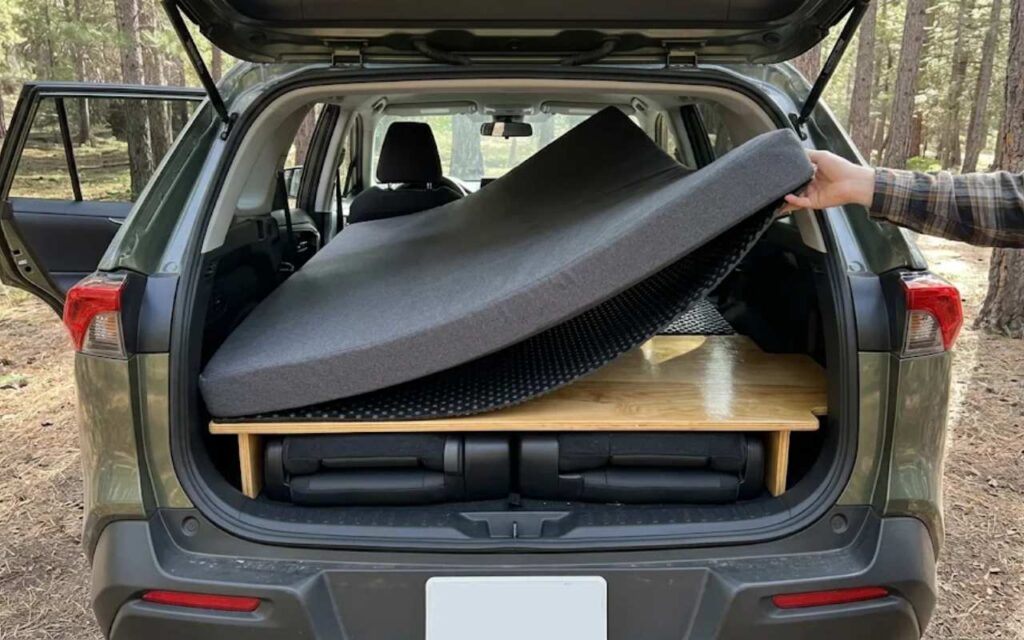
- Best Under-Mattress Air-Gap Mat: DRICORE DuraDri™ Mattress Underlay elevates foam mattresses by 3/4 inch using a heavy-duty dimpled polypropylene channel so warm body moisture evaporates horizontally instead of condensing on solid plywood (Platform Ventilation Essential).
- Best Modular Ventilation Tiles: VEVOR Interlocking Drainage Tiles (12″ x 12″ PVC Modular Mats) snap together with 0.6-inch (15 mm) support pins to create a raised, non-absorbent airflow grid beneath custom-cut SUV mattresses without wood carpentry (Budget Modular Spacer).
- Best Wood-Safe Mold Killer: Concrobium Mold Control Spray crushes existing mold spores on plywood platforms and bed slats with zero bleach, ammonia, or VOCs while leaving an invisible mineral barrier against regrowth (Platform Remediation Pick).
Thermal Bridging & Dew-Point Condensation: Why Foam Acts Like a Sponge
Even campers traveling in arid climates frequently discover black mildew spots underneath their mattress within months because of the temperature difference across the foam core.
How Warm Body Heat Meets Cold Vehicle Decks
- The Mattress-to-Platform Dew-Point Trap: Community discussions on Expedition Portal and r/RVLiving explain the exact mechanism: your body warms the top of the mattress to roughly 85°F–95°F while cold night air circulates beneath the vehicle chassis and inside the unheated cargo bay. Because open-cell memory foam insulates the top from the bottom, warm moisture-laden perspiration passes straight through the foam and hits the cold plywood deck, dropping below the dew point and condensing directly at the interface.
- Why Tightly Fitted Mattresses Trap Water: Overlander vendor advisories note that wedging a custom-cut foam mattress tightly against all four interior walls or trim panels blocks edge airflow completely, turning the underside of the pad into an anaerobic mildew incubator.
- Why Raw Plywood & Trunk Carpet Make It Worse: Gluing automotive trunk-liner carpet onto unsealed plywood creates a capillary wick that holds dampness against raw wood fibers and construction adhesive. Sealing plywood decks with two coats of water-based polyurethane, marine varnish, or a mold-inhibiting primer prevents moisture from soaking into the wood grain.
Why Drilling Holes in Plywood Platforms Often Fails
One of the most repeated DIY tips online is drilling a grid of 1.25-inch to 1.5-inch holes across a solid plywood sleeping platform, yet real-world builders consistently report mold growing right between the holes.
Comparing Under-Mattress Ventilation Methods
| Platform Ventilation Method | Airflow Performance | Real-World Builder Observations & Caveats |
|---|---|---|
| Sealed Plywood + 3/4″ Ventilation Mat (DuraDri / Hypervent) | Best Low-Profile Solution | Maintains a continuous 360-degree air channel across the entire footprint while adding minimal height to SUV headroom. |
| Spaced Wooden Bed Slats (2″–3″ Gaps) | High Airflow (Requires Clear Space Below) | Eliminates solid wood contact, provided you do not cram window covers or gear flush against the bottom of the slats. |
| 12″x12″ Interlocking Drainage Tiles (VEVOR) | Good Modular Air Gap (0.6″ Pins) | Non-absorbent PVC grid lifts foam 0.6 inches off the deck; choose standard biocide-free PVC drainage tiles for indoor sleeping cabins. |
| Drilling Grid Holes in Solid Plywood Alone | Frequently Fails | Damp foam still presses flat against the unperforated wood between holes, trapping localized moisture rings. |
Why Continuous Air Channels Beat Perforated Sheets
- Zero Lateral Airflow Between Holes: Builder reports on r/vandwellers and Skoolie.net point out that when a heavy foam mattress rests directly on perforated plywood, the foam compresses into the holes and seals flat against the solid wood bridges between them, leaving 80% or more of the mattress bottom with zero air movement.
- The Under-Bed Gear Blockage Trap: Even builders who install spaced wooden bed slats report sudden mildew outbreaks if they stuff fabric window covers, blankets, or plastic totes tightly underneath the slats, blocking convective air exchange. Keep at least 1 to 2 inches of open air clearance beneath slatted decks, or lay a crush-resistant spacer like DRICORE DuraDri™ Mattress Underlay or VEVOR Interlocking Drainage Tiles across solid plywood decks. For build layouts that preserve ceiling clearance, see our SUV bed setup guide.
Foam Core Contamination vs. Wood Treatment: Safe Remediation Rules
Once you spot mildew underneath your sleeping setup, the remediation protocol differs sharply between porous open-cell foam and solid wood platforms.
When to Replace Foam vs. How to Treat Plywood Platforms
- Why Moldy Memory Foam Must Usually Be Discarded: According to U.S. EPA guidance on mold cleanup in porous materials, mold infiltrates empty spaces inside porous materials and is often impossible to remove completely, meaning contaminated foam padding usually must be thrown away. As a practical camper rule of thumb, once fungal growth penetrates into the open-cell inner core or spans patches larger than a dinner plate, replace the mattress rather than relying on surface sprays.
- Never Use Liquid Chlorine Bleach on Wood or Foam: Auto detailers and van builders warn against pouring household bleach onto plywood or foam mattresses; bleach is roughly 90% water, adding more moisture into porous wood grain while failing to kill subsurface mold roots. Instead, scrub visible surface growth outdoors while wearing an N95 mask, spray the sealed plywood platform with EPA-registered Concrobium Mold Control Spray, and let it dry completely in direct sunlight.
- Post-Trip Flipping & Breathable Encasements: Experienced car campers on r/vandwellers prevent recurrence by standing their mattress upright on its side for 24 hours after every trip (never storing it folded in a damp garage or inside a closed SUV; see our guide on why the back of your car smells damp after camping) and using a breathable zippered mattress encasement rather than a non-breathable vinyl cover that traps sweat against the foam.
Car Camping Mattress Mold FAQ
Why did my memory foam mattress get moldy on a plywood platform even with holes drilled in it?
Drilling holes in solid plywood leaves flat, unperforated wood bridges between the holes where damp foam presses tight and traps condensation. Adding a continuous 3/4-inch air-gap layer, such as spaced wooden slats, interlocking drainage tiles, or a dimpled polypropylene underlay, allows humid air to escape horizontally across the entire underside of the mattress.
Can you clean mold out of a car camping memory foam mattress?
Surface mildew on a removable zippered fabric cover can be machine-washed, but once mold spores penetrate deep into porous open-cell memory foam, the foam cannot be safely sanitized and should be replaced. Solid wood platforms and slats, however, can be scrubbed outdoors, treated with an EPA-registered mineral mold killer like Concrobium, and sealed with polyurethane.
Does a waterproof mattress protector prevent mold under a camping mattress?
A breathable waterproof mattress encasement helps block liquid sweat from soaking into the foam core from above, but you still need an air gap underneath the mattress. Even with a waterproof cover on top, warm body heat passing through the foam will cause ambient cabin humidity to condense against a cold plywood or metal platform below if there is no ventilation layer.
Checklist for a Mold-Free Car Camping Sleeping Platform
Preventing mildew beneath your sleeping setup requires combining moisture barriers with continuous under-bed airflow:
- Seal Raw Wood & Ditch Trunk Carpet: Coat plywood platforms with polyurethane or marine varnish instead of wrapping them in moisture-trapping carpet.
- Create a Continuous Air Gap: Lay DRICORE DuraDri™ Mattress Underlay or VEVOR Interlocking Drainage Tiles beneath your mattress rather than relying on drilled holes alone.
- Air Out Upright After Every Trip: Stand your mattress on edge with cabin doors open after camping, and treat wood surfaces with Concrobium Mold Control Spray at the first sign of mustiness.

Written by Enzo S.
Enzo is an outdoor enthusiast with over 12 years of hands-on vehicle overland and car-camping experience. He specializes in testing interior cargo setups, calculating vertical space limitations, and crowdsourcing verified platform build data across active enthusiast networks to provide practical, completely bias-free gear solutions.