Affiliate Disclosure: As an Amazon Associate, I earn from qualifying purchases. If you purchase through our links, we may earn a small commission at no extra cost to you.
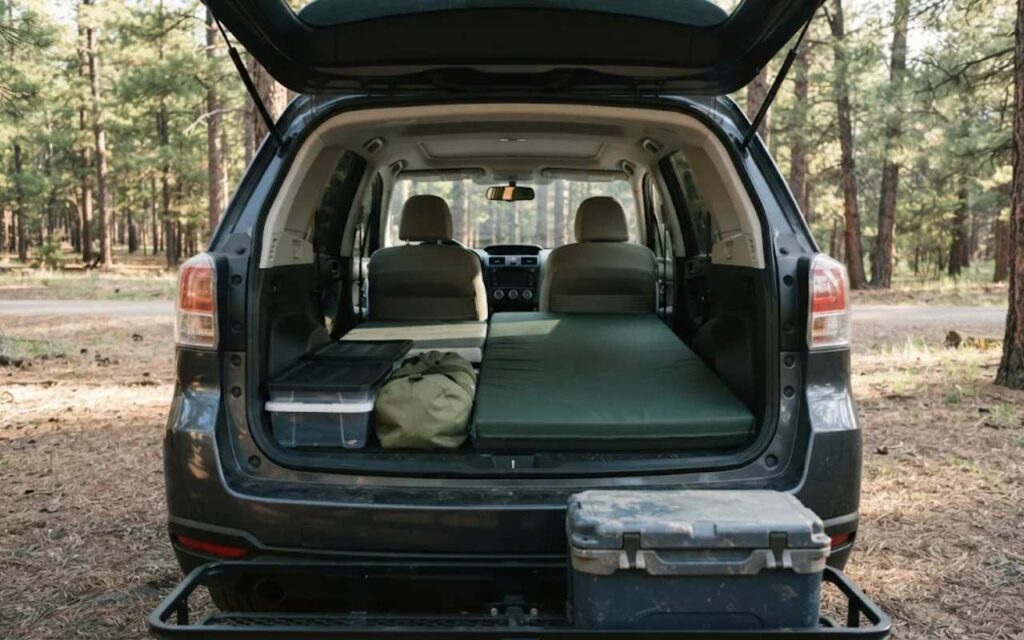
To pack an SUV for camping and maximize headroom, ditch tall wooden drawer platforms in favor of a no-build floor setup using a 3-to-4-inch self-inflating foam/air mattress, slide both front seats forward at bedtime to bridge the rear footwell gap with height-matched totes or coolers, and offload bulky cargo bins to a hitch carrier or rooftop box. Reclaiming hidden storage inside the spare-tire well and skipping sagging ceiling cargo nets preserves the 33.5 to 36 inches of vertical clearance most adults need to sit upright and change clothes comfortably.
Knowing how to pack an SUV for camping to maximize headroom starts with cutting vertical stack height, because a traditional 10-to-12-inch wooden drawer platform plus a 6-inch mattress steals up to 18 inches of ceiling clearance before you even crawl inside.
In midsize crossovers and SUVs like the Toyota RAV4, Subaru Outback, Honda CR-V, and 4Runner, where cargo floor-to-headliner height typically measures around 32 to 36 inches, losing 15 or more inches leaves barely 20 to 24 inches above the bed, making it physically impossible to sit upright or put on a jacket.
Drawing on owner cabin measurements, gear dimension specs, and build teardowns across r/carcamping, r/PriusDwellers, 4Runners.com, and Tacoma World, this guide breaks down the exact no-build packing sequence, shallow bin dimensions, and external offloading tricks that keep your vertical living space wide open.
Quick Gear Picks: Verified Low-Profile SUV Packing Gear
- Best Slim High-R-Value Mattress: EXPED MegaMat 10 (3.9-Inch Self-Inflating Foam/Air Pad) delivers 4-season insulation and pressure-tunable back support at 3.9 inches thick, reclaiming 2 to 3 inches of critical sitting headroom over bulky 6-inch memory foam slabs (Headroom-Saving Sleep Pick).
- Best Ultra-Shallow Under-Platform Tote: IRIS USA 40-Quart Under-Bed Storage Bin (6.13-Inch Height) slides cleanly beneath ultra-low platforms or folded seat setups without forcing an 8-to-14-inch riser like standard overlanding trunks (Low-Profile Storage Essential).
- Best Exterior Cargo Offloader: Mockins Heavy-Duty Folding Hitch-Mount Cargo Carrier (60″ x 24″) moves bulky coolers, camp chairs, and rigid gear totes completely outside the cabin so your interior stays clear at bed height (Zero-Ceiling-Loss Carrier).
Why Tall Drawer Platforms Ruin SUV Headroom (And What Replaces Them)
Building a plywood drawer box is the most common first-timer mistake in SUV camping, because dead wood framing and heavy drawer slides consume vertical inches you cannot get back.
The Seated-Height Math Inside Crossovers & Midsize SUVs
- Why 8-to-12-Inch Risers Feel Claustrophobic: Owner measurements documented on 4Runners.com sleeping platform threads and r/carcamping show that even a relatively modest 8.25-inch platform in a 5th-Gen 4Runner leaves only 27 inches of headroom at the lowest ceiling point before adding bedding, and a 7-to-8-inch riser in a Subaru Forester leaves roughly 24 inches of vertical space. Most adults require 33.5 to 36 inches from seat surface to ceiling to sit upright without hunching.
- The “Front-Seat Shuffle” & Footwell Bridge Hack: Instead of raising the entire cargo floor to clear tall bins, r/PriusDwellers and r/carcamping campers keep the mattress directly on the folded rear seats and follow a two-step bedtime shuffle:
- Slide both front seats all the way forward and tilt the backrests upright.
- Bridge the open rear footwell void (which measures roughly 17 to 18 inches deep in many crossovers and hatchbacks) using height-matched gear already in the car, such as a narrow Yeti Roadie 24 cooler (17.4 inches tall), stacked plastic totes, a milk crate topped with folded blankets, or a headrest-hung cutting board, and shift front-accessible duffels onto the front seats overnight.
- Mining the Spare-Tire Well: Pulling the molded foam tool tray out from around your spare tire (or relocating a full-size spare to an exterior carrier) opens up deep under-floor cavities for recovery gear, rain jackets, camp stoves, and tools without adding a single millimeter to your sleeping deck height.
Shallow-Bin Discipline & Slim Mattresses: Reclaiming 4 to 8 Inches
When every inch of vertical space counts, swapping oversized gear boxes and thick foam mattresses for low-profile alternatives transforms how livable your SUV feels during rainy days.
Comparing Common SUV Storage Bins & Mattresses by Height
| Gear Category & Model | Published Height | Headroom Impact & Best Placement |
|---|---|---|
| IRIS USA 40-Qt Under-Bed Storage Bin | 6.13″ Tall | True shallow under-bed bin; fits under a minimal 2×6 riser or slides onto front seats at night without eating ceiling space. |
| Front Runner Wolf Pack Pro | 9.1″ Tall | Forces at least a 10″ platform if stored under-bed; best carried on a roof rack or hitch carrier instead. |
| Plano Sportsman’s Trunk (56-Qt / 108-Qt) | 13.0″ – 14.0″ Tall | Severe headroom killer if placed under a bed; use only as top-layer cargo shifted to front seats or hitch rack at night. |
| EXPED MegaMat 10 vs. 6″ Memory Foam | 3.9″ vs. 6.0″+ Tall | Swapping a 6″ foam slab for a 3.9″ air/foam hybrid reclaims over 2 inches of sitting clearance while still isolating seat hinges. |
Why Shallow Totes & Thin Hybrid Pads Beat Overlanding Trunks
- The Plano Trunk Trap: While rugged Plano Sportsman trunks (13.0 to 14.0 inches tall) are popular for general cargo, community reviews note they are far too tall for under-bed storage in low-roof SUVs. If you want an ultra-low sleeping deck, stick to IRIS USA 40-quart under-bed boxes (6.13 inches tall) or soft compressible duffels that squeeze into wheel-well pockets.
- Dialing In a 3-to-4-Inch Pad for Back Support: Overlanders on car-camping forums point out that letting a small puff of air out of an EXPED MegaMat 10 (3.9 inches thick) until your hips just barely kiss the floor when sitting allows the internal open-cell foam to cradle your shoulders and spine flat without needing a 6-inch mattress. Solo campers gain extra side floor space with the single MegaMat 10 (25.6 to 30.3 inches wide), while couples wanting the same 3.9-inch headroom-saving profile can use the wider EXPED MegaMat Duo 10. To fix minor seat-fold angles without thick risers, check our complete SUV bed setup guide.
Ceiling Nets vs. External Offloading: Keeping the Roofline Clear
Marketing photos often show overhead ceiling cargo nets stuffed with blankets and jackets, but real-world SUV campers consistently report that they ruin headroom.
Why Overhead Ceiling Nets Fail & Safe Exterior Offloading Rules
- The Ceiling Net Sag Problem: Verified owner feedback across Subaru Outback, Forester, and RAV4 setups shows that ceiling attic nets clipped to passenger grab handles sag downward under even light loads, blocking your rearview mirror while driving and brushing against your head when sitting up in bed. Keep your headliner completely clear and use soft compressible duffels packed along the lower side walls instead.
- Offloading Bulky Gear to a Hitch Carrier or Roof Box: The cleanest way to gain interior headroom is moving heavy coolers, firewood, camp chairs, and rigid totes outside onto a Mockins Hitch-Mount Cargo Carrier or aerodynamic rooftop box.
- Critical Tongue-Weight & Exhaust-Heat Safety Checks: Before loading a hitch cargo basket, verify your SUV’s maximum tongue weight rating in the owner’s manual (many compact crossovers with Class II/III hitches are rated for 150 to 350 lbs of vertical tongue weight, which includes both the carrier weight and your gear) and position coolers or plastic totes clear of the tailpipe exhaust stream so hot exhaust gases do not melt plastic bins. For more space-saving cabin layouts, see our guide on how to sleep in your SUV.
Maximizing SUV Headroom FAQ
How much headroom do you need to sit up in an SUV while camping?
Most adults need roughly 33.5 to 36 inches of vertical clearance from the top of the mattress to the headliner to sit upright comfortably. Because most midsize SUVs only offer 32 to 36 inches from the bare cargo floor to the ceiling, keeping your sleeping surface directly on the folded seats with a 3-to-4-inch pad is essential for sitting upright.
Do ceiling cargo nets save headroom when car camping?
No, in low-roof crossovers like the Subaru Outback, Forester, and Toyota RAV4, ceiling cargo nets sag downward even under light clothing, obstructing your rearview mirror and hitting your head when you sit up. Soft duffels tucked along the lower side walls or a hitch-mounted cargo carrier preserve far more usable headroom.
How do you fill the gap behind the front seats when sleeping in an SUV without a platform?
Slide both front seats all the way forward with their seatbacks tilted upright, then bridge the open rear footwell void with height-matched gear already in your vehicle. A narrow 24-quart cooler (such as the 17.4-inch Yeti Roadie 24), stacked under-bed totes, a milk crate topped with folded blankets, or an inflatable footwell filler supports your pillows without raising the floor height.
Checklist for Maximum Vertical Space Inside Your SUV
Reclaiming sitting headroom inside an SUV comes down to keeping every inch of gear as close to the floor, or outside the cabin, as possible:
- Skip Tall Drawer Boxes: Sleep directly on the folded rear seats with a 3.9-inch EXPED MegaMat 10 instead of losing 12 to 18 inches to wood framing and thick foam.
- Use the Front-Seat Shuffle & Shallow Totes: Slide front seats forward at night, bridge the footwell with a height-matched cooler or tote, and stick to IRIS USA 40-Quart Under-Bed Bins (6.13 inches tall) for low-profile storage.
- Keep the Headliner Empty: Ditch sagging ceiling nets and offload bulky totes or chairs onto a Mockins Hitch-Mount Cargo Carrier within your vehicle’s tongue-weight limit.

Written by Enzo S.
Enzo is an outdoor enthusiast with over 12 years of hands-on vehicle overland and car-camping experience. He specializes in testing interior cargo setups, calculating vertical space limitations, and crowdsourcing verified platform build data across active enthusiast networks to provide practical, completely bias-free gear solutions.