Affiliate Disclosure: As an Amazon Associate, I earn from qualifying purchases. If you purchase through our links, we may earn a small commission at no extra cost to you.
The back of your car smells damp after camping because hidden water has pooled underneath the cargo floorboard inside the spare-tire well, soaked into sound-deadening jute padding, or incubated inside an unventilated foam mattress and plywood sleeping platform. Covering the smell with Febreze or mixing vinegar and baking soda will not fix it; you must pull the spare tire and damp under-carpet padding to dry them completely, clear clogged sunroof, hatch, or A/C drains, and treat carpets and trim with a botanical or EPA-registered mold cleaner.
Figuring out why the back of your car smells damp after camping requires checking beneath the surface carpet, because automotive cargo floors hide deep moisture pockets that stay wet for weeks after a trip. Even when the top carpet feels dry to the touch, runoff from sweating coolers, overnight window condensation, or breached roof-rack and hatch seals drains straight down into the spare-tire well and saturates the sponge-like jute padding underneath.
Drawing on auto-detailing remediation protocols, chemical safety baselines, and vehicle teardowns across r/AutoDetailing, r/vandwellers, r/Subaru_Outback, and Tacoma World, this guide identifies the exact hidden moisture traps behind post-trip mildew smells and the safe chemistry that eliminates them permanently.
Quick Gear Picks: Verified Cargo Moisture & Mildew Remediation Gear
- Best Under-Mattress Airflow Layer: DRICORE DuraDri™ Mattress Underlay elevates memory foam mattresses and camp pads by 3/4 inch with a dimpled polypropylene air gap so body heat and condensation evaporate instead of breeding mildew (Sleeping Platform Essential).
- Best Odorless Mold & Mildew Spray: Concrobium Mold Control Spray (32 oz) eliminates existing mold spores and musty odors on car carpets, upholstery, wood platforms, and hard trim with zero bleach, ammonia, or VOCs while leaving an invisible barrier against regrowth (Detailer-Trusted Mold Killer).
- Best Enzymatic Carpet & Upholstery Odor Destroyer: Biokleen Bac-Out Enzyme Stain & Odor Eliminator uses live enzyme cultures and plant-based surfactants to digest organic mildew, sweat, and food odors trapped in car carpets and foam padding without harsh fumes or chlorine.
Hidden Moisture Trap #1: Water Pooling in the Spare-Tire Well & Jute Padding
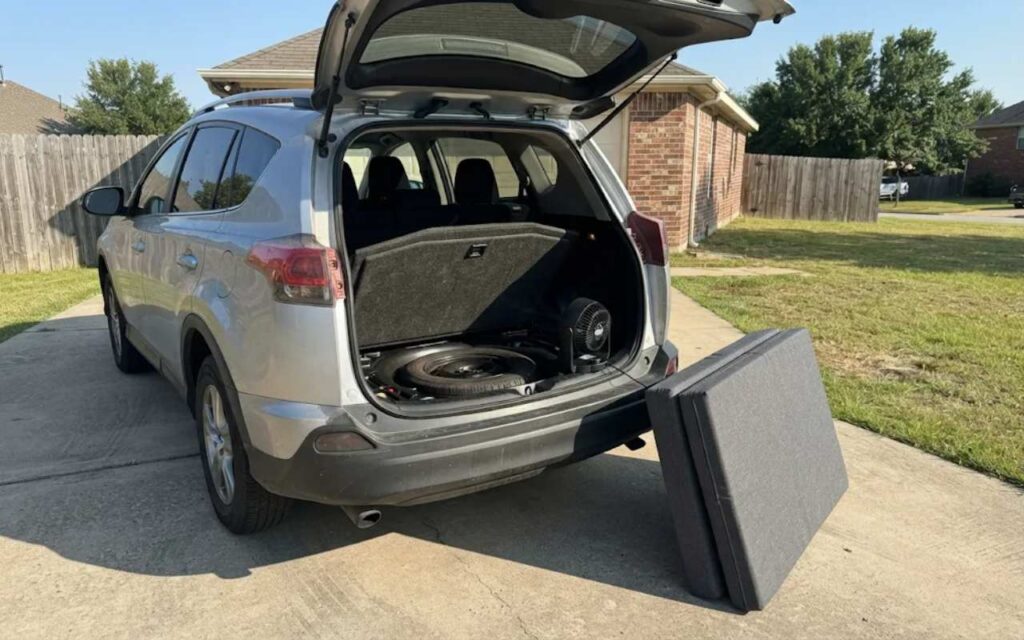
The lowest point in almost every crossover or SUV cargo bay is the stamped-steel spare-tire well (and adjacent 12V hybrid/auxiliary battery tray), which acts as a hidden catch basin for any water that enters the cabin.
Why Surface Vacuuming Fails When Underlay Foam Is Soaked
- The “Giant Sponge” Effect Under Your Carpet: Auto-detailing threads on r/AutoDetailing and r/e39 warn that the thick jute and open-cell foam sound-deadening pad bonded beneath factory cargo carpet holds gallons of water like a sponge. Pressing down firmly with your palm on the rear carpet often reveals hidden squishing even when the top fibers feel dry, and a shop-vac alone cannot extract water trapped at the bottom of the foam pad.
- Pulling the Spare Tire & Rubber Drain Plugs: Community teardowns on r/prius and r/hondafit emphasize lifting the cargo floorboard, unbolting the spare tire, and inspecting both the spare-tire basin and rear side-pocket wells for standing water. Most SUVs include factory rubber drain plugs in the bottom of the spare-tire well that can be popped out to drain water before running a box fan over the bare metal for 24 to 48 hours.
- Sealing Wet Gear on the Drive Home: Tossing damp rainflies, muddy boots, or wet SUV window screens for camping into a closed cargo area turns your vehicle into a warm greenhouse on the drive home, migrating moisture straight into seatbacks and carpet padding.
Hidden Moisture Trap #2: Unventilated Foam Mattresses & Plywood Platforms
If your damp, “wet-dog” odor gets worse a few days after unpacking, your sleeping pad or DIY wood platform is likely trapping perspiration and bottom-side condensation.
Stopping Mattress Sweat & Bottom-Side Condensation
- Why Plywood Platforms Trap Sweat: Open-cell memory foam and self-inflating camp pads absorb overnight body perspiration, which migrates downward until it hits cold plywood or folded rear seatbacks. Community experiments on r/vandwellers show that simply drilling holes in a plywood sleeping deck is not enough to prevent mold spots; adding a continuous airflow spacer such as a DRICORE DuraDri™ Mattress Underlay or spaced wooden bed slats underneath the mattress allows trapped moisture to evaporate.
- Never Fold or Roll a Mattress Immediately After Waking: Overlanders on r/CampingGear and r/vandwellers note that folding a tri-fold foam mattress or rolling up a self-inflating pad immediately after waking in humid weather seals warm body moisture inside the core. Prop the mattress on its side with doors open for 30 minutes at camp, and always air it out indoors between trips.
Hidden Moisture Trap #3: Clogged Sunroof, Hatch & A/C Evaporator Drains
When dampness reappears every time it rains—or whenever you run the climate control after a humid camping trip—trail debris or aftermarket roof hardware has likely blocked a factory drain line.
Five Trail-Specific Leak & Drain Points to Inspect
- Sunroof Rear Drain Tubes: Pine needles, dust, and pollen frequently clog the rear sunroof drain tubes on crossovers (widely documented on r/Rav4), causing rainwater to overflow the headliner cassette and run silently down the C- or D-pillars into the spare-tire well.
- 3rd Brake Light Gasket & Hatch Debris: Owners on r/Subaru_Outback trace tailgate leaks to dried-out 3rd brake light gaskets at the top of the liftgate, as well as leaves and pine needles wedged along the upper hatch weatherstripping that prevent a watertight seal.
- Aftermarket Roof-Rack Footpads: Off-road threads on Tacoma World show that improperly sealed roof-rack mounting bolts or footpads can channel rainwater inside the door weatherstripping and down the pillars into the floor padding.
- Rear Bumper Pressure-Relief Check Valves: Damaged or unseated one-way cabin pressure-relief vents hidden behind the rear bumper cover can let road spray and heavy rain wick upward into lower quarter-panel carpet during wet highway drives.
- Clogged A/C Evaporator Drain & Cabin Air Filter: If the musty smell intensifies when you turn on the cabin fan or A/C, trail dust or pine needles may have plugged the A/C evaporator drain tube beneath the firewall—causing condensate to overflow onto the front passenger floor padding, or saturated a paper cabin air filter with damp mildew spores.
Proven Odor-Killers vs. Ineffective Cover-Ups
Once mildew spores colonize carpet fibers or foam, masking the smell with air fresheners only delays remediation. Auto detailers rely on targeted chemistry while avoiding high-risk gas treatments unless strictly necessary.
Comparing Cargo Odor & Mildew Treatments
| Treatment Method | Effectiveness & Safety | Detailer Reality & Material Caveats |
|---|---|---|
| Physical Drying + Botanical / Oxidizing Spray (EC3 / Vital Oxide) | Best Primary Fix | Removes trapped moisture first, then neutralizes mildew spores on both hard plastics and soft carpets/upholstery without damaging rubber seals. |
| Ozone Generator Shock Treatment | Last Resort Only (Strict Limits) | Toxic to breathe and degrades rubber weatherstripping, foam, and wiring if run too long; requires unoccupied use (max ~30 mins) and thorough airing out. |
| Chlorine Dioxide Vapor / Gas Kits | Strict Evacuation Required | Penetrates fabrics deeply, but gas-phase chlorine dioxide is a severe respiratory irritant requiring total evacuation and full ventilation before driving. |
| Vinegar + Baking Soda Paste / Febreze | Ineffective Myth | Mixing acid (vinegar) and base (baking soda) neutralizes both into salty water; air fresheners only mask active mildew growth. |
Safe Remediation Rules & Gas-Treatment Warnings
- Why Vinegar + Baking Soda Cancels Out: Auto-detailing communities on r/AutoDetailing and r/Cartalk routinely debunk mixing vinegar and baking soda—combining an acid and a base creates harmless fizzing salt water that loses the cleaning power of both ingredients. Instead, dry the padding completely, spray porous carpet, upholstery, and wood platforms with Concrobium Mold Control Spray, and treat deep organic carpet odors with Biokleen Bac-Out Enzyme Stain & Odor Eliminator.
- Ozone & Chlorine Dioxide Safety Warnings: According to U.S. EPA guidance on ozone generators used as air cleaners, ozone is a lung irritant that must never be breathed by people or pets, and prolonged high concentrations oxidize bare metal and crack rubber door seals. Always treat source moisture first, run any shock treatment strictly unoccupied following manufacturer SDS evacuation windows, and air the vehicle out completely with all doors open before driving. For preventative cabin airflow on future trips, review our guide on how to prevent window condensation sleeping in an SUV.
Damp Car Smell After Camping FAQ
Why does my SUV trunk smell musty even though the carpet feels dry?
Water from sweating coolers, overnight condensation, or hatch/sunroof leaks drains underneath the cargo floorboard into the spare-tire well and soaks into the thick jute padding beneath the carpet. Because jute and open-cell underlay foam hold water like a sponge from the bottom up, the top carpet can feel dry while mildew grows underneath.
Does mixing vinegar and baking soda remove mildew smell from car carpet?
No, mixing vinegar and baking soda causes an acid-base reaction that neutralizes both ingredients into salty water, leaving mildew spores behind. To permanently remove damp odors, lift the carpet to dry the underlay padding completely with a fan and treat carpets and trim with a dedicated botanical or oxidizing mold cleaner such as EC3 or Vital Oxide.
Is it safe to use an ozone machine to get rid of damp smells in my car?
Only as a strictly unoccupied, short-duration last resort after removing the wet source. Breathing ozone damages lung tissue, and running an ozone generator for hours inside a vehicle can dry out and crack rubber weatherstripping, door seals, and interior plastics.
Could a clogged A/C drain or cabin air filter cause a damp smell after camping?
Yes, if the musty odor gets stronger when you turn on your dashboard fan or A/C, a damp cabin air filter or clogged A/C evaporator drain tube may be trapping moisture. Replacing the cabin air filter and clearing trail debris from the rubber A/C drain tube under the firewall stops condensate from overflowing onto your floor padding.
Keeping Your SUV Cargo Bay Dry & Odor-Free After Every Trip
Eliminating post-camping damp smells comes down to finding hidden water pockets fast and drying soft gear outside the vehicle:
- Inspect the Spare-Tire Well First: Pull the cargo floorboard, remove the spare tire, drain any standing water, and run a fan over damp jute padding until bone dry.
- Ventilate Beneath Your Mattress: Place a DRICORE DuraDri™ Mattress Underlay or bed slats under foam mattresses, and never fold or store damp bedding or window covers inside a closed car.
- Kill Spores & Organic Odors at the Source: Skip vinegar-and-baking-soda myths in favor of complete drying paired with Concrobium Mold Control Spray or Biokleen Bac-Out Enzyme Stain & Odor Eliminator.

Written by Enzo S.
Enzo is an outdoor enthusiast with over 12 years of hands-on vehicle overland and car-camping experience. He specializes in testing interior cargo setups, calculating vertical space limitations, and crowdsourcing verified platform build data across active enthusiast networks to provide practical, completely bias-free gear solutions.