Affiliate Disclosure: As an Amazon Associate, I earn from qualifying purchases. If you purchase through our links, we may earn a small commission at no extra cost to you.
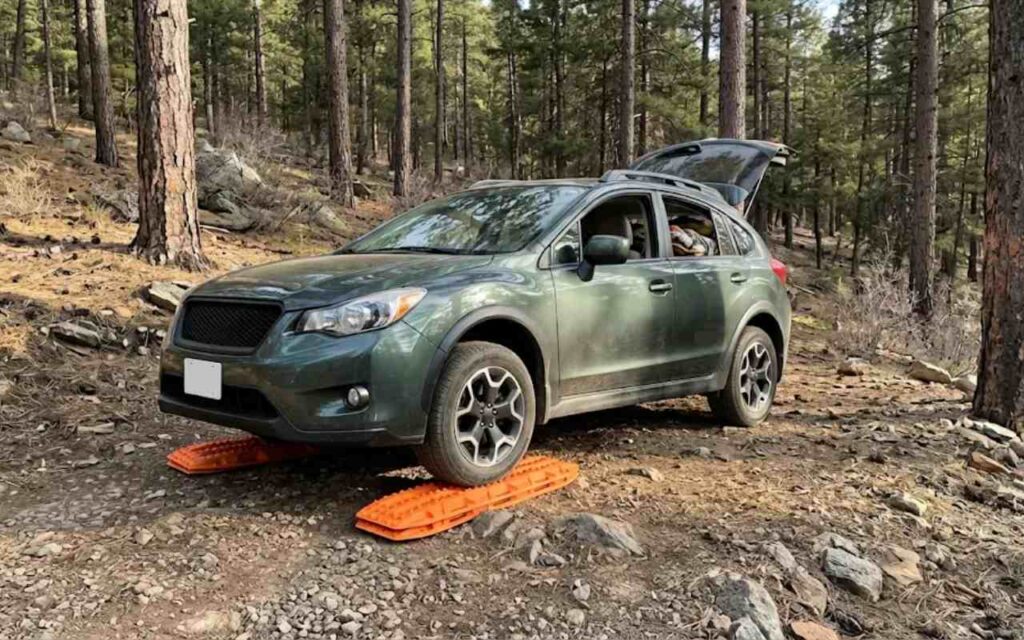
To level a vehicle on uneven trail ground without blocks, creep forward and backward a few feet to drop your high-side tires into existing ruts or mounds while orienting your sleeping position so your head sits 1° to 2° higher than your feet, drive your low-side tires onto nested traction recovery boards or wide flat rocks, or shim the low edge of your sleeping pad inside the cabin with folded towels and gear duffels. Avoid digging tire trenches on fragile public land or placing round logs under tires, and always reinflate tires with a 12V compressor before highway driving if you lower high-side tire pressure at camp.
Learning how to level a vehicle on uneven trail ground without blocks starts with reading natural terrain contours rather than chasing a zero-degree bubble level, because the human body tolerates up to 4 degrees of front-to-back slope easily as long as side-to-side roll stays under 3 degrees and your head rests higher than your feet. On dispersed Forest Service and Bureau of Land Management (BLM) turnouts, creeping your tires just 18 to 36 inches into an existing rut or dirt mound eliminates most side-to-side lean in seconds without unpacking a single piece of gear.
Drawing on vehicle-positioning physics, public-land Leave No Trace rules, and overlander trail tests across Expedition Portal, Overland Bound, Go Fast Forum, and IH8MUD, this guide breaks down five proven terrain-reading techniques, traction-board ramp methods, and interior mattress shims that deliver flat sleep anywhere off-pavement.
Quick Gear Picks: Dual-Purpose Trail Leveling & Recovery Gear
- Best Dual-Purpose Recovery & Leveling Board: BUNKER INDUST Off-Road Traction Boards with Jack Base (Pair) nest together beneath low-side tires to provide 1.5 to 2.5 inches of stable lift on uneven campsites (with a flat built-in jack base for solid ground contact) while doubling as mud and snow recovery tracks (Budget Dual-Use Pick).
- Best Heavy-Duty Nylon Traction Boards: MAXTRAX MKII Recovery Boards (Pair) nest together beneath low-side tires to add 1.5 to 2.5 inches of effective lift on rutted campsites without carrying separate plastic RV blocks (Overland Standard Dual-Use Gear).
- Best Tire-Deflation Leveling Backup: VIAIR 84P Portable 12V Tire Inflator Compressor plugs into your SUV’s 12V accessory socket so you can safely drop high-side tire pressure at camp to level your chassis by roughly an inch and reinflate back to highway PSI before rolling out (Mandatory Reinflation Essential).
Terrain Micro-Positioning & The “Head Higher Than Feet” Rule
Before stacking rocks or touching a shovel, experienced overlanders spend 60 seconds using natural campsite topography to cancel out chassis tilt.
Fix #1 & Fix #2: The 3-Foot Terrain Creep & Uphill Pillow Flip
- Why Side-to-Side Level Matters More Than Front-to-Back Pitch: Community observations across Ford Transit and Go Fast Camper forums note that side-to-side tilt above 3 degrees causes you to roll against the vehicle wall all night, whereas front-to-back slope up to 4 degrees goes largely unnoticed if your head is on the uphill end. Keep side-to-side variance within roughly 1 inch across your sleeping platform and aim for a 1° to 2° head-up bias so blood does not pool in your head.
- Fix #1 — The 3-Foot Terrain Creep: Drive slowly forward and backward in 1-foot increments while watching a smartphone bubble-level app on your dashboard or sleeping deck. Dropping a single high-side tire into a shallow trail rut, or rolling a low-side tire onto a natural dirt hump, frequently corrects 2 to 3 inches of side lean with zero external props.
- Fix #2 — Reverse Your Sleeping Direction Inside the Cabin: When a dispersed turnout slopes gently nose-up or nose-down, simply flip your pillow placement inside the SUV so your head sleeps on whichever end of the vehicle sits higher.
Fix #3: Traction Recovery Boards vs. Rocks, Firewood & Trenching
When natural ground contours leave your SUV leaning more than 3 degrees sideways, dual-purpose recovery gear or stable natural materials can bridge the remaining gap safely.
Comparing Block-Free Trail Leveling Methods
| Block-Free Leveling Method | Typical Lift / Drop | Safety Rules & Trail Trade-Offs |
|---|---|---|
| Nested Traction Boards (BUNKER INDUST / MAXTRAX) | +1.5″ to +3.0″ Lift | Creep up slowly without spinning tires (wheel spin melts nylon lugs); lay boards flat on dirt rather than bridging sharp rocks. |
| Wide Flat Rocks or Split Hardwood | +1.0″ to +3.0″ Lift | Build a wide, flat ramp wider than the tire tread; never use round logs (they roll dangerously) or pry rocks from protected soil. |
| Interior Mattress Shims (Towels / Duffels) | +1.0″ to +2.5″ Pad Lift | Zero ground impact and instant setup; works best under thick foam/air hybrid mattresses without sacrificing headroom. |
| Digging Tire Trenches on High Side | -1.5″ to -3.0″ Drop (Restricted) | Prohibited on many National Forest/BLM dispersed sites and destroys fragile desert cryptobiotic soil crusts; avoid on public lands. |
Safe Ramp Setup & Leave No Trace Rules on Public Lands
- Using Recovery Boards Without Warping Them: Overlander trail tests on Overland Bound and Expedition Portal show that nested BUNKER INDUST or MAXTRAX MKII recovery boards (roughly 3.3 to 3.5 inches stacked together) give 1.5 to 3 inches of reliable lift under low-side tires once settled into dirt. Always lay boards flat on soil or gravel rather than bridging hollow gaps over sharp rocks, which can warp traction boards under overnight static weight, and engage 4-Low (or gentle throttle) so tires never spin and melt the traction teeth.
- Why Round Logs & Trenching Are Bad Trail Habits: Never place unsplit round logs under tires; round timber rolls abruptly under vehicle weight and can shoot out from under the tire. Similarly, U.S. Forest Service dispersed camping rules (such as Deschutes National Forest guidelines) and Leave No Trace outdoor ethics advise against digging trenches at campsites, especially in arid Southwest deserts where a single tire rut crushes living cryptobiotic soil crusts that take decades to recover. If using natural materials, choose wide, flat rocks or split flat-sided firewood wider than your tire patch, set your parking brake firmly, and chock the opposite wheel.
Fix #4 & Fix #5: Interior Bed Leveling & The Tire-Deflation Hack
When rocky ground, steep pull-offs, or nighttime arrivals make exterior leveling impractical, you can level your sleeping surface directly inside the SUV or adjust tire pressure.
Shimming Your Mattress Inside vs. Airing Down High-Side Tires
- Fix #4 — Shimming the Low Side Inside Your SUV: Community members on Ford Transit and Expedition Portal forums frequently skip exterior wheel leveling altogether and tuck folded beach towels, extra jackets, or soft clothing duffels underneath the low edge of their sleeping pad. Because a 3-to-4-inch self-inflating foam pad naturally absorbs minor angle changes (see our guide on how to pack an SUV for camping to maximize headroom), a 1-to-2-inch fabric shim underneath the low side creates a dead-flat sleep surface in 15 seconds. For multi-day platform builds, check our SUV bed setup guide.
- Fix #5 — Airing Down High-Side Tires (With a Mandatory Compressor Rule): Some overlanders on IH8MUD drop tire pressure on the high-side tires from a street baseline of 35–40 PSI down to roughly 15–18 PSI, allowing sidewall flex to lower that side of the vehicle by about 1 to 1.5 inches without touching a rock or shovel. Never drive at highway speeds on deflated tires; always carry a reliable 12V compressor such as the VIAIR 84P Portable Tire Inflator to restore factory door-jamb PSI before returning to pavement.
Block-Free Vehicle Leveling FAQ
How level does an SUV need to be for comfortable sleeping?
Your SUV does not need to sit at a dead-zero bubble level; keeping side-to-side tilt under 3 degrees (within roughly 1 inch across your mattress) and positioning your head 1 to 2 degrees higher than your feet is comfortable for most sleepers. Front-to-back slope up to 4 degrees is rarely noticeable when your head rests on the uphill side.
Can you use traction boards like MAXTRAX to level a vehicle when camping?
Yes, nesting or folding traction boards beneath your low-side tires provides roughly 1.5 to 3 inches of stable lift without carrying dedicated RV leveling blocks. Drive onto the boards slowly without spinning your tires (which melts nylon lugs), support the full length of the board on flat ground so it does not warp over sharp rocks, and set your parking brake before shutting off the engine.
Is it okay to dig a shallow trench for my tires to level my SUV at a campsite?
No, digging tire trenches violates Leave No Trace principles and is explicitly prohibited at many National Forest and Bureau of Land Management (BLM) dispersed campsites. In desert ecosystems, digging or driving off established routes destroys fragile cryptobiotic soil crusts that require decades to regenerate; use terrain positioning, traction boards, or interior mattress shims instead.
Field Checklist for Leveling Your SUV Without Blocks
Getting a flat, comfortable night’s sleep on uneven trail ground takes less than two minutes when you follow this sequence:
- Read the Ground First: Creep forward and backward a few feet using a phone level app to park high-side tires in existing dips and orient your head 1° to 2° uphill.
- Use Dual-Purpose Ramps Safely: Place BUNKER INDUST or MAXTRAX MKII boards (or wide flat rocks/split firewood, never round logs) flat under low-side tires and engage the parking brake.
- Shim Inside or Air Down Responsibly: Tuck folded towels or duffels under the low edge of your mattress, or air down high-side tires only if you carry a VIAIR 88P 12V Compressor to reinflate before highway driving.

Written by Enzo S.
Enzo is an outdoor enthusiast with over 12 years of hands-on vehicle overland and car-camping experience. He specializes in testing interior cargo setups, calculating vertical space limitations, and crowdsourcing verified platform build data across active enthusiast networks to provide practical, completely bias-free gear solutions.